Murals That Signal
by Naoko Mabon
“It hasn't yet reached Kalumbila.” Artist Benard Taulai Sakala commented with a sweating smile emoji when I posted on social media a short video of a rare September rain from Solwezi. “Are you in Kalumbila?!” I asked. “Yes, Lumwana actually,” responded Benard. Checking his social media posts, although based in Lusaka, he seems to be working on a series of mural paintings inside of newly built rooms in Kalumbila District. I had no idea where Lumwana was, but as I was planning to move to Kalumbila after Solwezi, I decided to pay a visit to his work station. My motivation was rooted in my simple curiosity of learning more about what he is working on in Kalumbila, but also, to confess, my limited network and online searching was failing me in identifying Kalumbila-based artists or makers whose practice closely works with the local contexts while challenging wider issues we collectively face today.
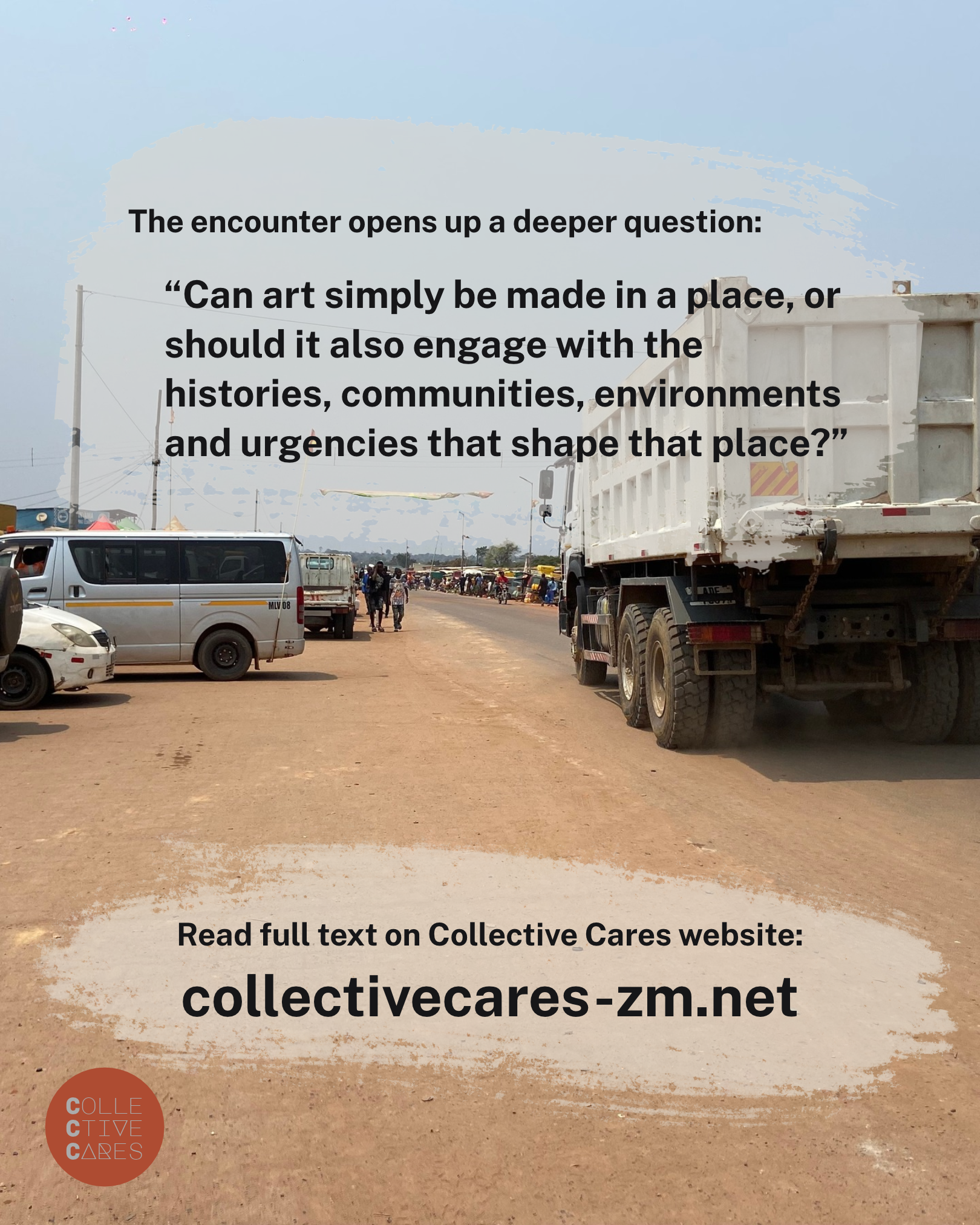
Moving from Ndola, Kitwe, Solwezi to Kalumbila showed me a particular landscape. A landscape of a range of slap heaps along a busy dusty road with yellow diggers and long trucks. A landscape of the buzz and the price of mineral extractions and “fast-paced growth” the industry claims they brought, which quickly leaves you sweaty and thirsty in a dusty heat.
Kalumbila District’s population is expanding by 2.8% per annum with 12 wards and 4 respected chiefdoms. It is promoted as “a true mining powerhouse” with Barrick Mine (formerly Lumwana Mine) and First Quantum Minerals’ Trident Foundation Mine (formerly Kalumbila Mine). However, I myself sensed a gap between the region’s promotional image of “the backbone of the economy of the nation” and people’s actual lived experience in this place - here, the land, the water and the air seem to have been hijacked and exhausted by overseas mining giants. In Mutanda, there are at least three waterfalls, the spirits of which have been continuously disrespected until today: on Google Maps their names appear as Queen Elizabeth, Herbert Stanley, and Ian Smith. Another example is that the township by Trident Mine was developed with new houses and tarmac roads, but a nearby township is, according to the local people, where people originally living in the current Trident Mine area were displaced after rare minerals were ‘discovered’. Mines built them basic houses but only agreed on limited or rather selective compensation, with no tarmac for roads resulting in harder access to shops and markets. Staying in the modern town by the Trident Mine, I found it hard to listen deeply to the stories of this place that still carries the stream of heritage from the time before industrial mining.
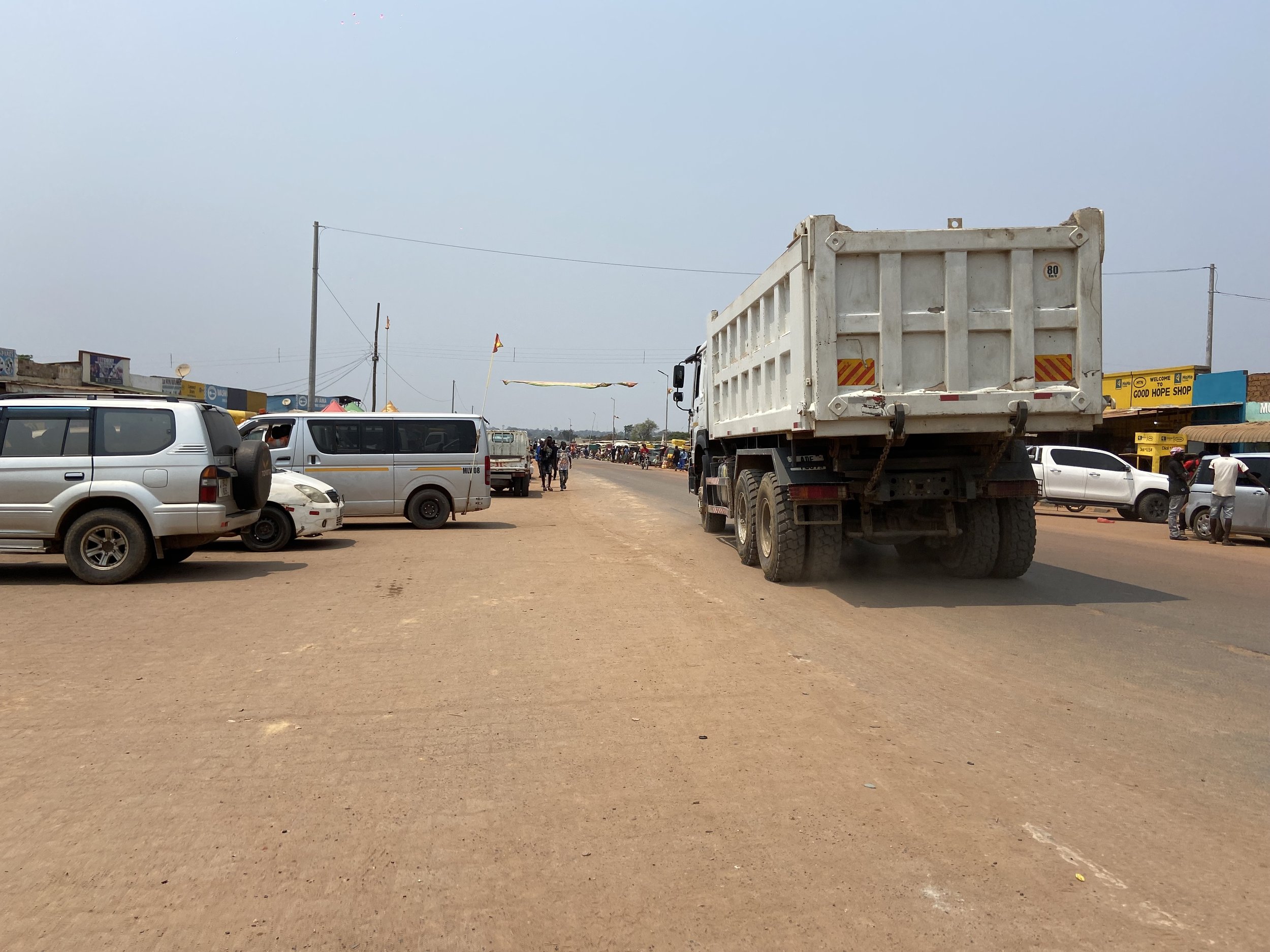
Image courtesy of the artist.
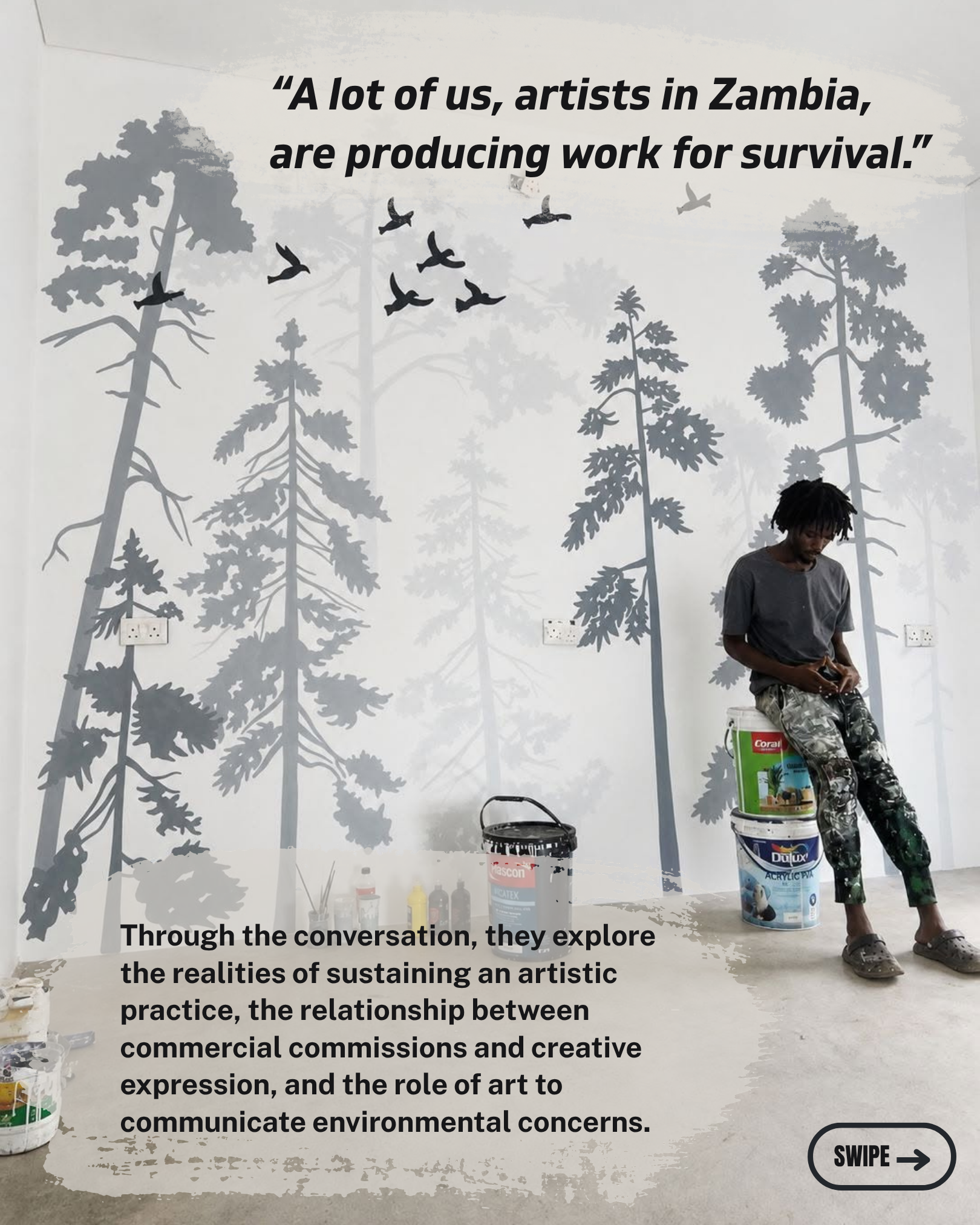
I visited Lumwana to meet Benard. Since neither of us are local to the area, the pin location I aimed for turned out to be in the middle of nowhere with an electric pylon. There was a construction site by the pylon and I remember that people working there looked at me in a way that they weren’t sure if I was seeking their guidance. Benard kindly came to rescue me from that hopeless situation. After a 20 minutes walk south from the main road, there was a development site of a new luxury accommodation. Although I wasn’t quite sure who is developing this accommodation and for whom, from the size of each room and kitchen, I sensed that it could be for clients or workers relating to the mining industry who will be staying here temporarily or occasionally. Benard has been commissioned to create a mural painting in every single bedroom here. There are easily over 30 bedrooms in that grounds. Despite a tight schedule of production, Benard kindly gave me a quick tour of his progress and the grounds of the accommodation. Each mural painting was unique with different motifs, such as trees, leaves, birds, geometric patterns. They are mainly in monochrome or softer colours, setting a tone of peace and harmony for a place to rest.
“This is my second time in Kalumbila. The first time was to check the place.” Benard told me that one day, the client contacted him after seeing online mural painting works he made in Lusaka, where he was raised and is still based. “This is how things can be developed as an artist. Your work is seen by someone who then wants you to paint.” He shared his experience when he was working in a phone booth. Being stuck in the booth waiting for customers, and yet, that job gave him a place to read books and draw. Gradually, people started noticing his drawings and asking him to draw for them. Benard is also a skilled plaster skimmer (best in the business I must add, according to the artist himself!) The Internet says that plaster skimming is “a thin layer of finishing plaster - usually 2 to 3 mm thick - applied over existing walls, ceilings or new plasterboard to create a smooth, flat surface ready for paint or wallpaper.” When skimming at the construction sites, people gradually recognised that he can also paint various shapes and forms well with colours. Being a skillful plaster skimmer not only provided a way to earn for living, but opened up the field of mural painting for Benard.
“Challange is that a lot of us, artists in Zambia, are producing work for survival. We tend to work to sell it off, just doing it for money, rather than community development. Rather than working together as a community, focusing on our own practices, growing the talents, having conversations, telling stories and making people understand what we do. We need more practice, building up, growing together as a collective,” said the artist, firmly.
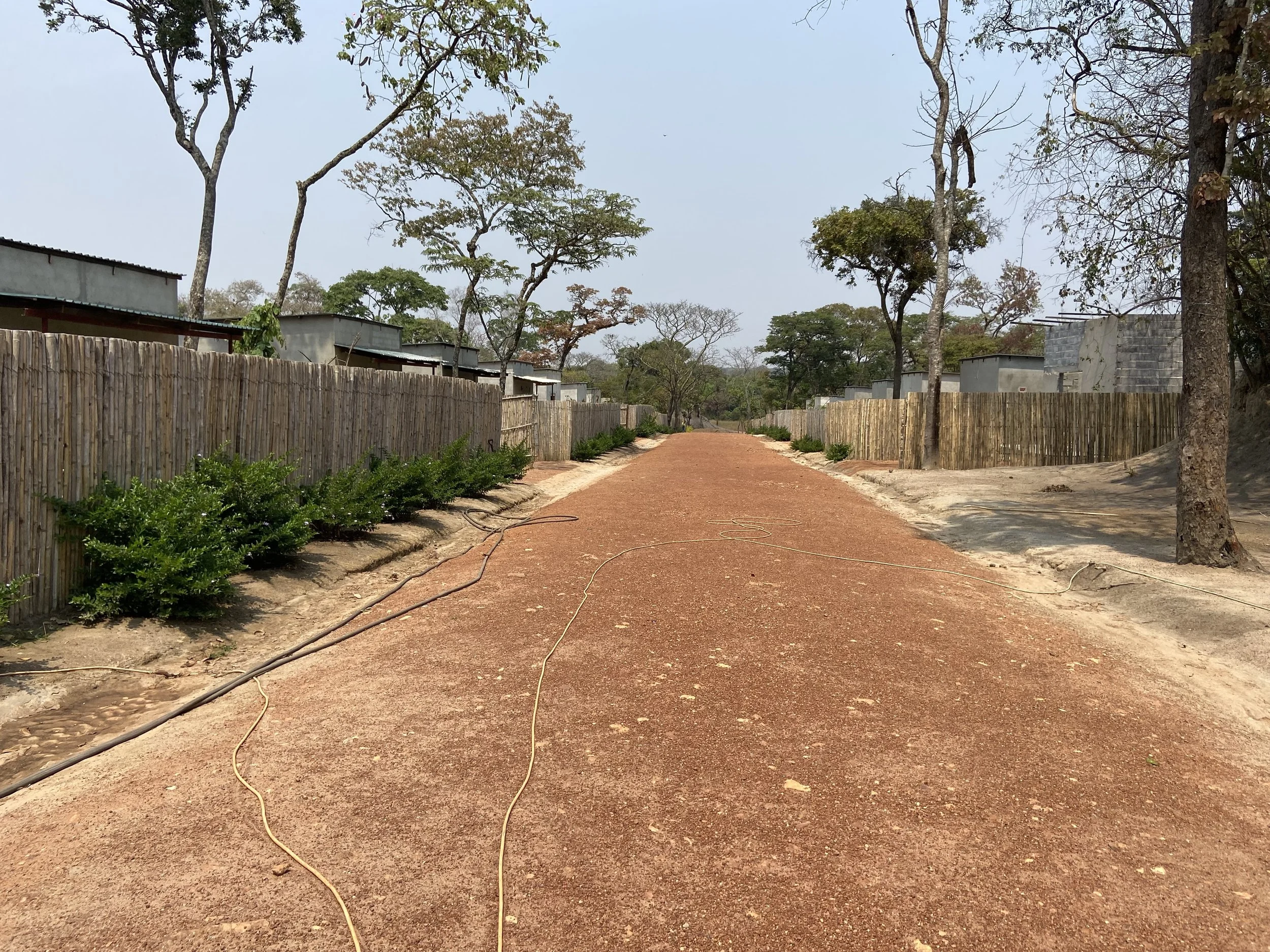
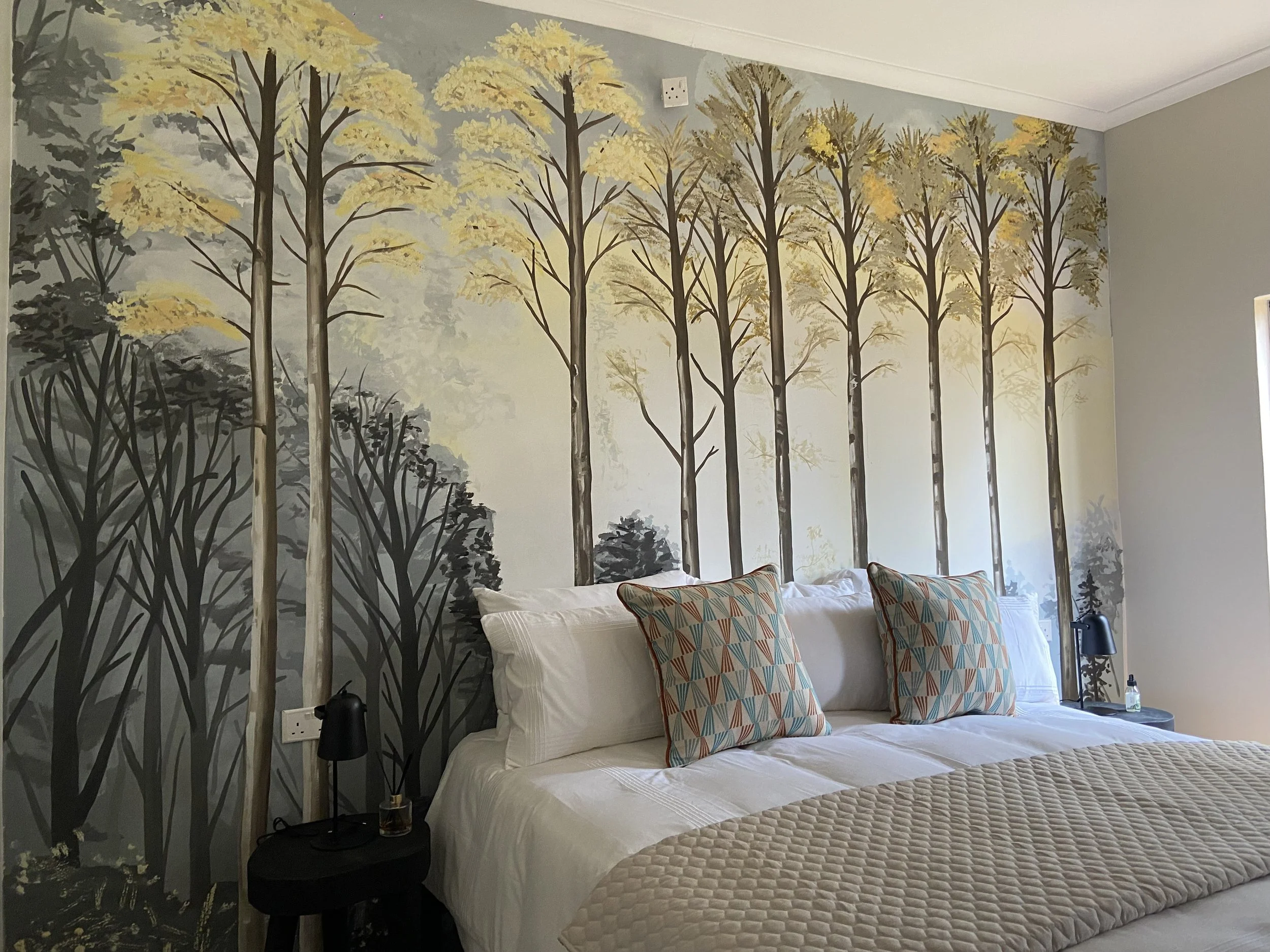
Image courtesy of the artist.
I asked Benard how he is balancing between his art and client work. Does he sometimes argue or negotiate with the clients to defend what he wants to express? “Usually, first and foremost, I have a conversation with the client. They usually want to see the artist too - how they work or where they work.” Benard said that sometimes his young age - 27 - surprises clients. Therefore, it is even more important for him to keep the schedule, keep the budget, while working harmoniously and making sure to satisfy the clients. By experience, he knows well enough that doing each work well and demonstrating what skills you have can lead to the next commissions to sustain you and your practice.
Another upside for being a skillful plaster skimmer is that when artistic work only doesn't provide him enough for living, at least he knows how to make cash. But not only the financial side of things or flat surfaces ready to paint on, plaster skimming skill both literally and metaphorically prepares a very foundation of what Bernard does. “Preparing the base is as important as the finished painting. It gives a foundation. If anything happens to the foundation, like cracks, you can’t paint on it. To make the perfect foundation, you need to know the materials well, tools well, processes of making well, and surrounding climates well.”
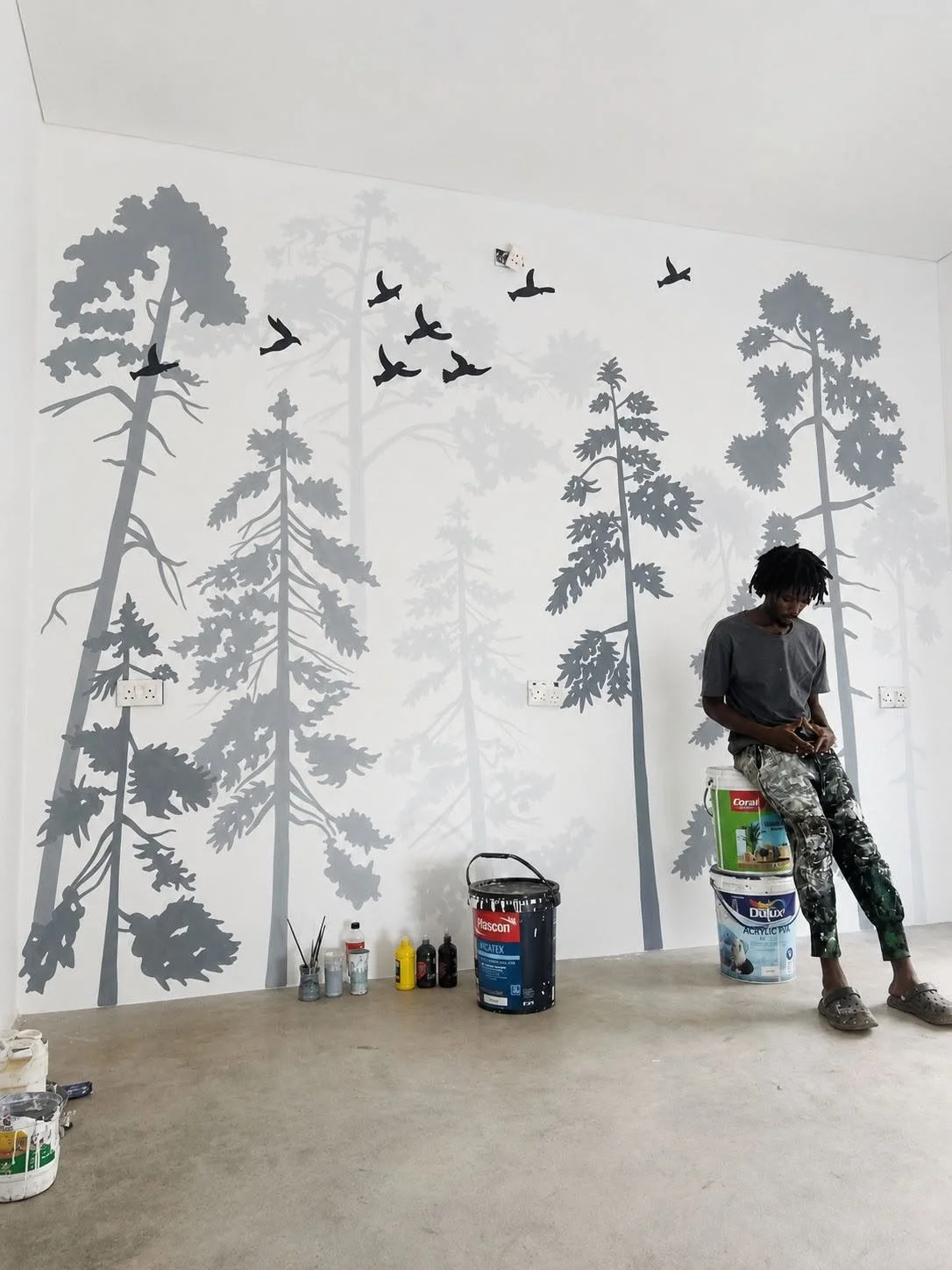
Image courtesy of the artist.
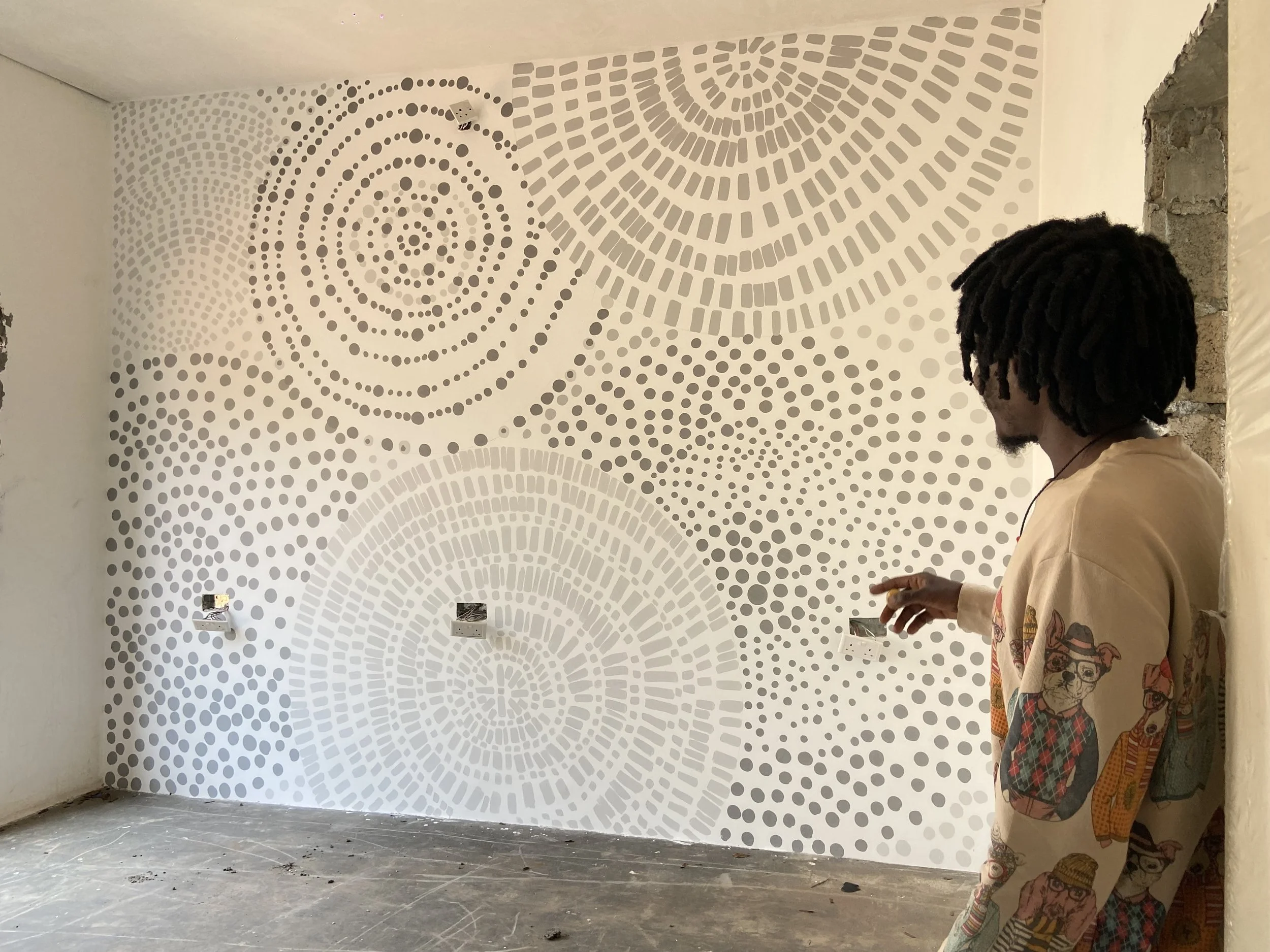
Image courtesy of the artist.
As an artist who typically goes into the bush for inspiration and concentration, Benard also passionately talked about the responsibility he feels for environmental injustice and for telling stories to the public, especially youths.
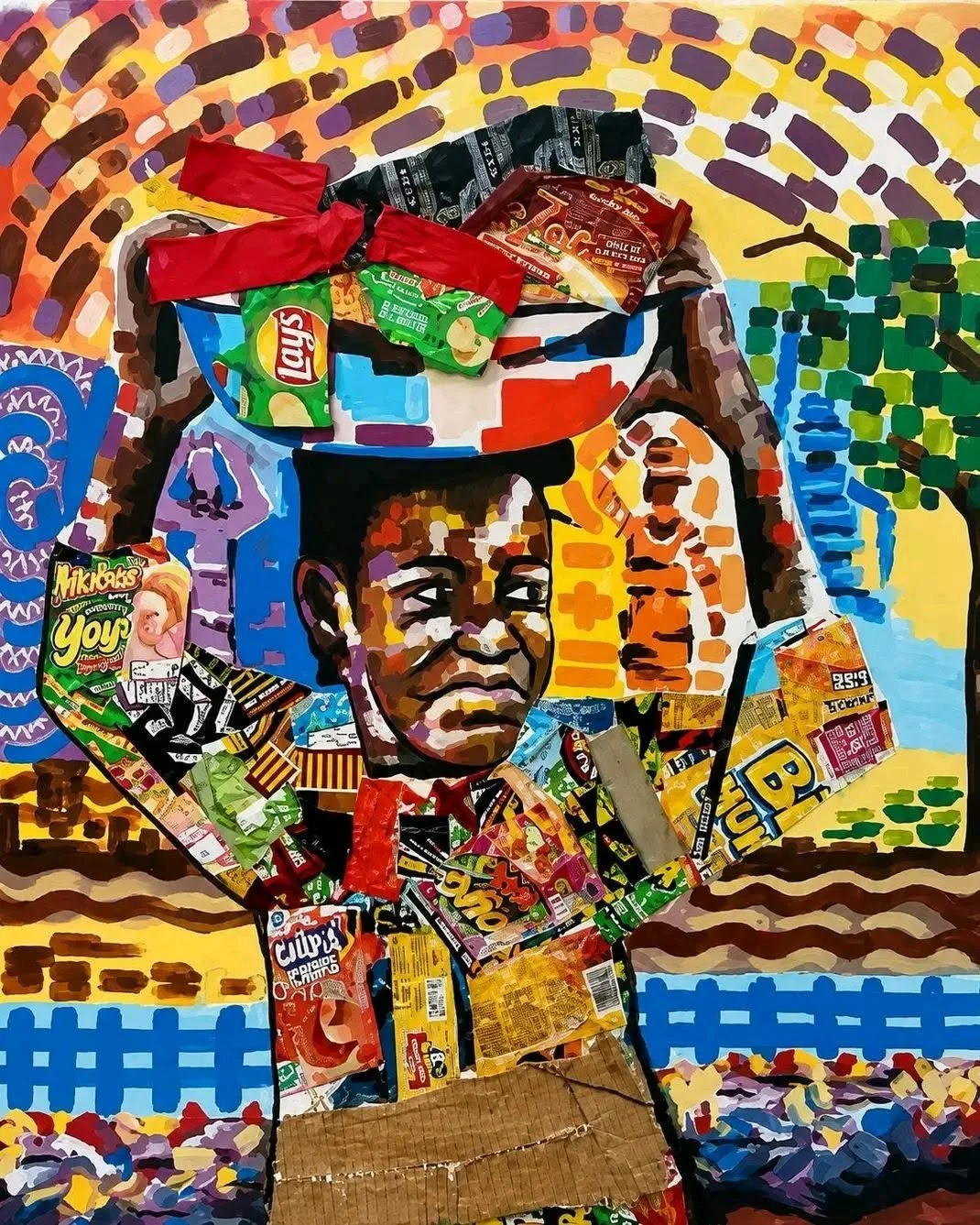
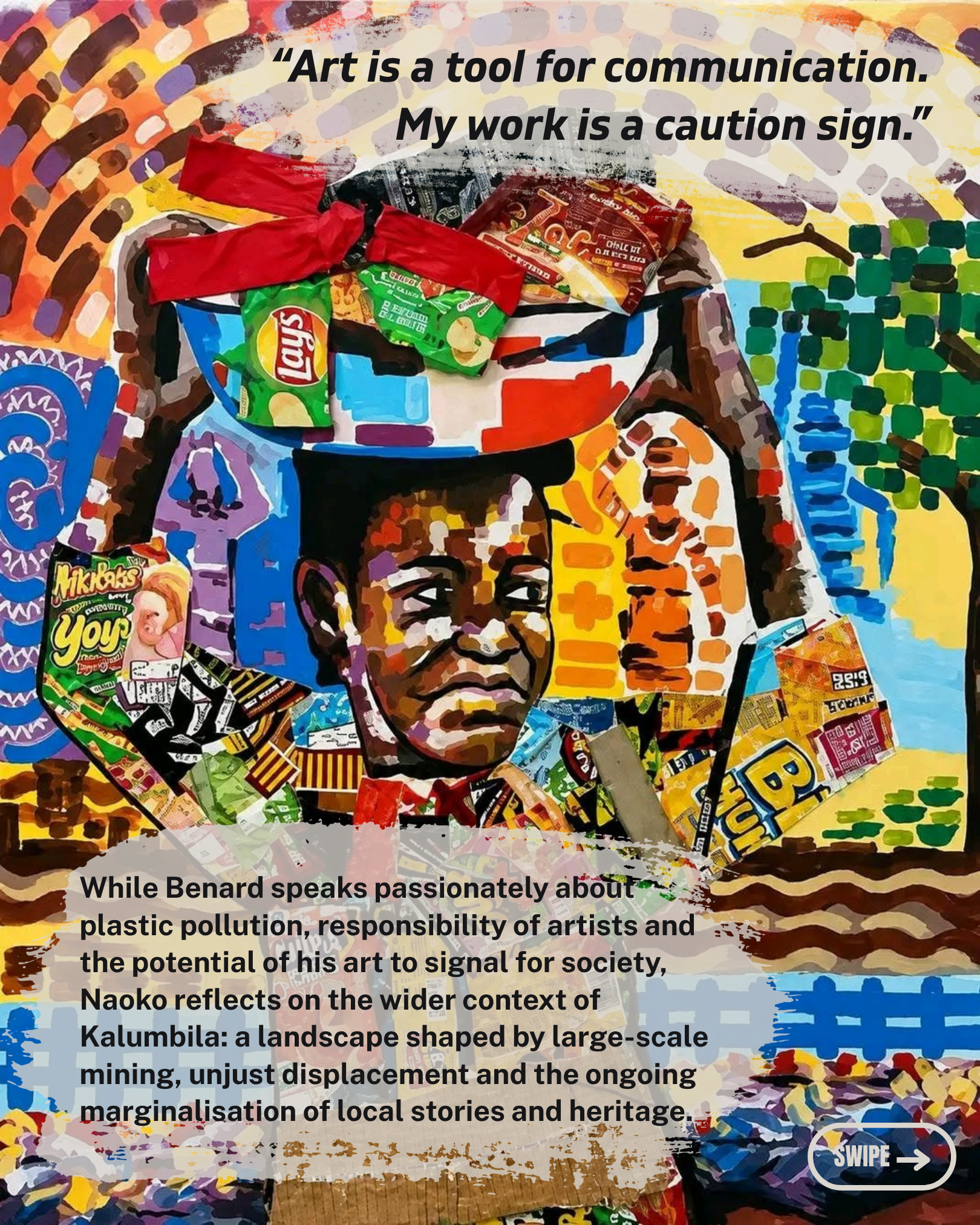
Image 7: “Beauty In Pollution” (2025)
“Art is a tool for communication. My work is a caution sign,” said the artist. “It communicates: let's take care of the environment and let's stay humble for our nature.” Amongst numerous environmental issues, what concerns Benard closely is the growing problem of plastic pollution and poor waste management. Benard continued: “Plastics affect me. It affects animals too, specifically elephants. It is a hazard. But it has become part of our everyday lives. How can we recycle plastic? How can we make youths aware that disposing of plastics is important?” This is the reason why he uses discarded plastic wrappers directly for paintings - cutting them out and collaging their bright colours. “For me, creating paintings and murals is a form of warning - don't trash, mind nature - it’s all about justice,” he added.
I appreciated my conversation with Banerd. It was full of insights and a sense of solidarity, which was extended to the more-than-human community on this shared planet. Though, one regret I have is that our conversation didn’t touch so much upon where we were then - Lumwana or Kalumbila - and the contexts of these particular localities. I have to admit that at some moments during my conversation with Benard, I may have forgotten that I was actually in Lumwana in Kalumbila District in Zambia. This is possibly because the focus of this particular commission was not necessarily in responding to heritage or context of specific locality. It is simply that the client is based in Lusaka, the commission was agreed in Lusaka, and the job was brought to Lumwana. Maybe for the next conversation, I would like to learn more about Benard’s site-specific pieces and how he has approached particular localities, communities, contexts, so that he could communicate their stories and urgencies through him making artworks. I am looking forward to that opportunity.
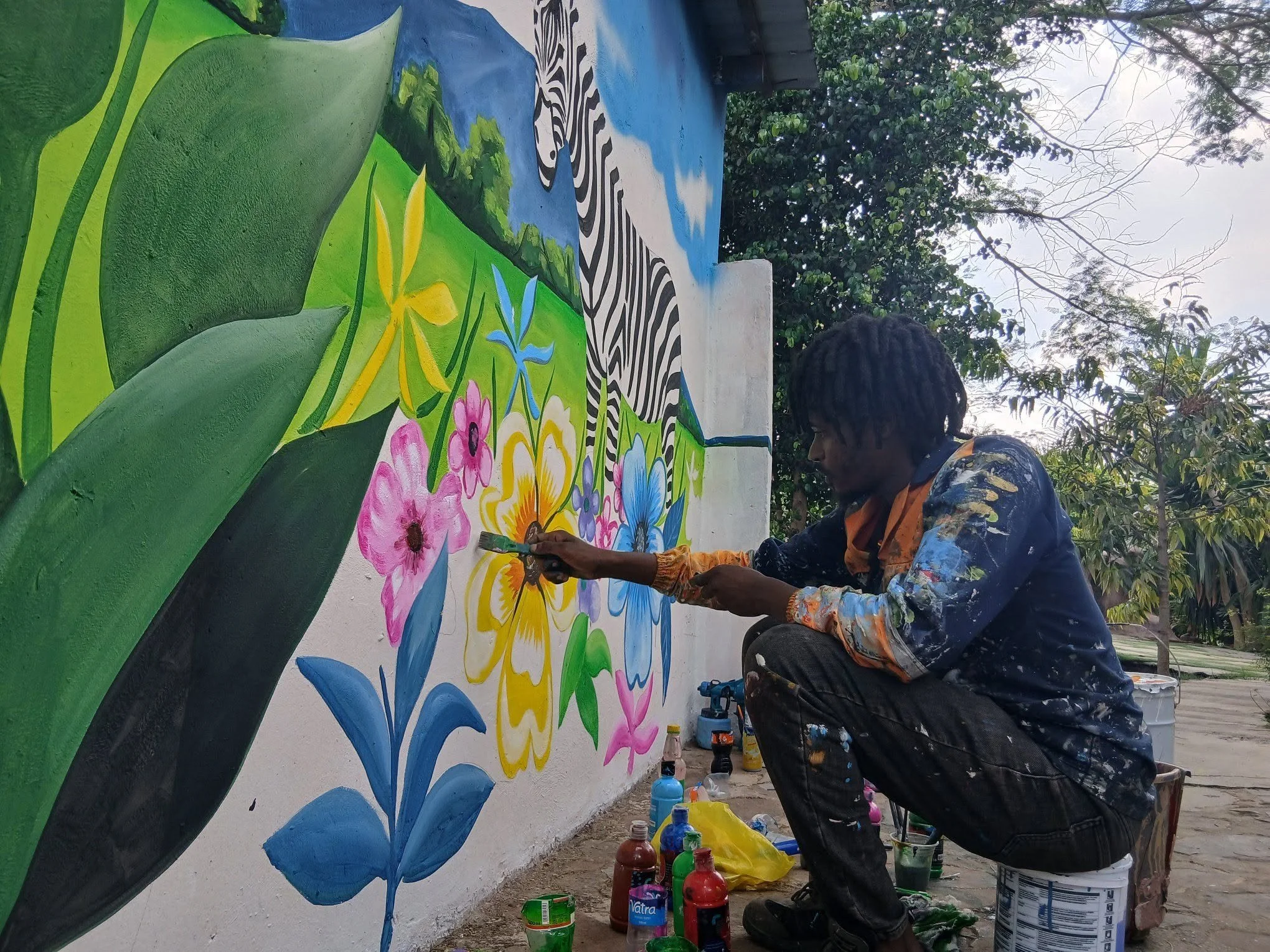
Image courtesy of the artist.
Images credits:
All work images courtesy of the artist.
Image 7: “Beauty In Pollution” (2025)
To find more about Benard’s work, please visit: www.facebook.com/benard.taulai