Studio Visit #005 - Serah Chule
You Get What You Ask For — Gradually, and With the Lessons to Keep It
by Luyando Muleya
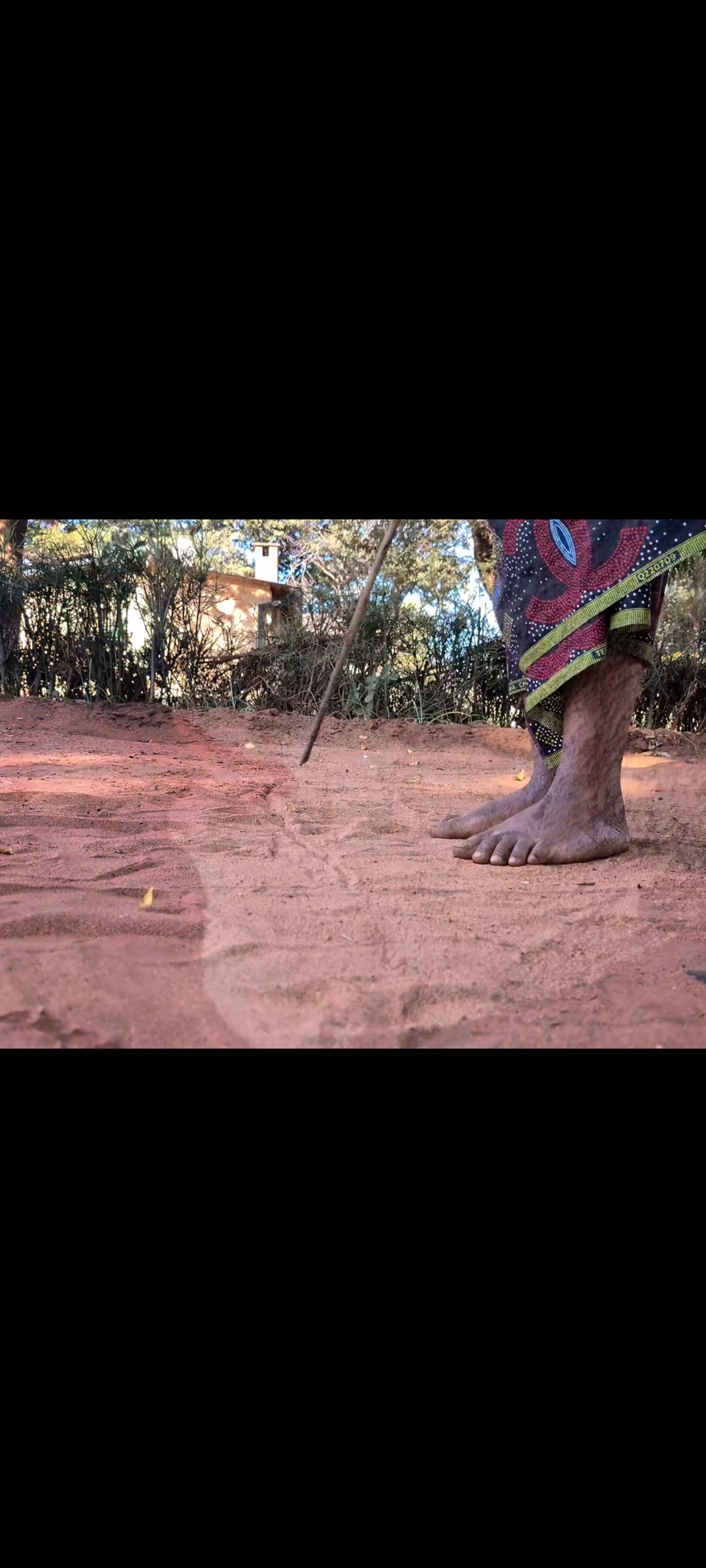
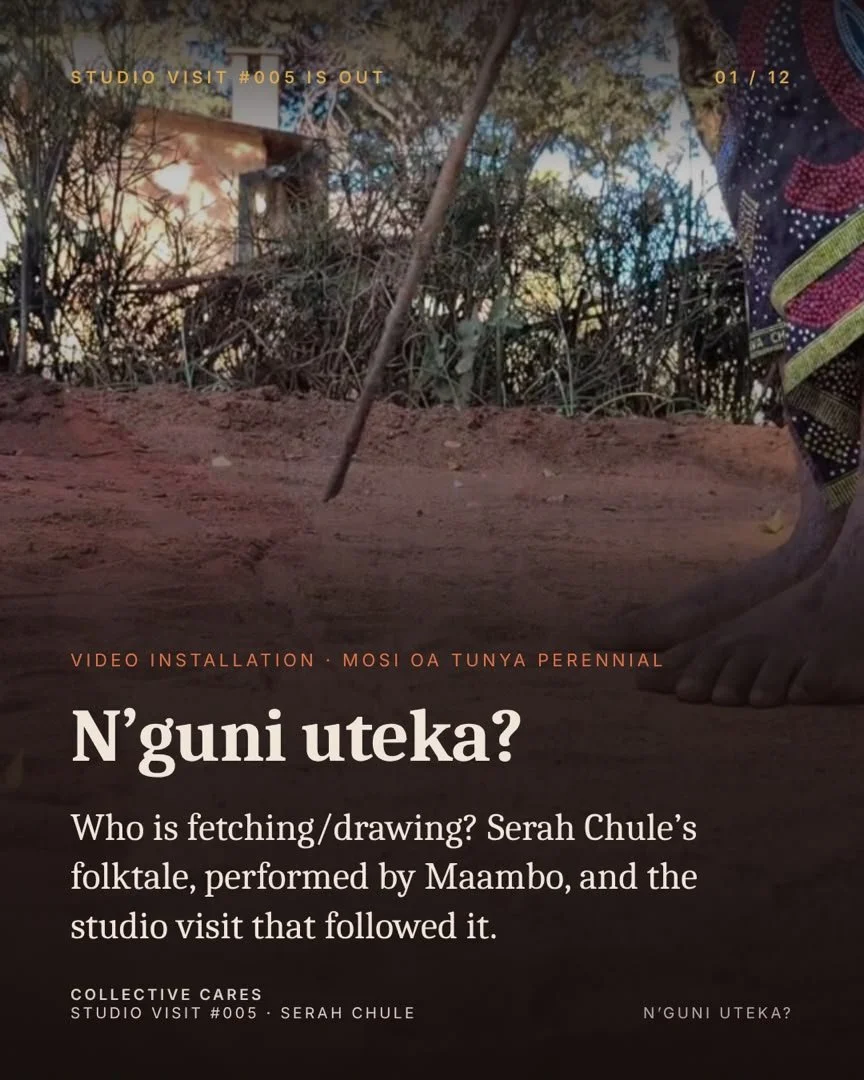
Still from “Nguni Uteka” by Serah Chule, performed by Maambo. Images courtesy of the artist.
N'guni uteka? — Who is fetching/drawing?
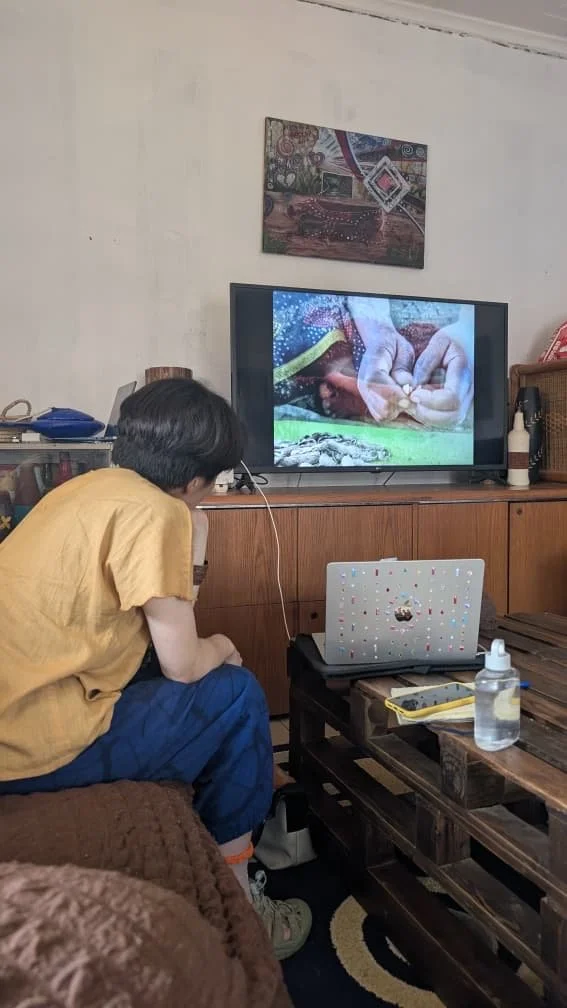
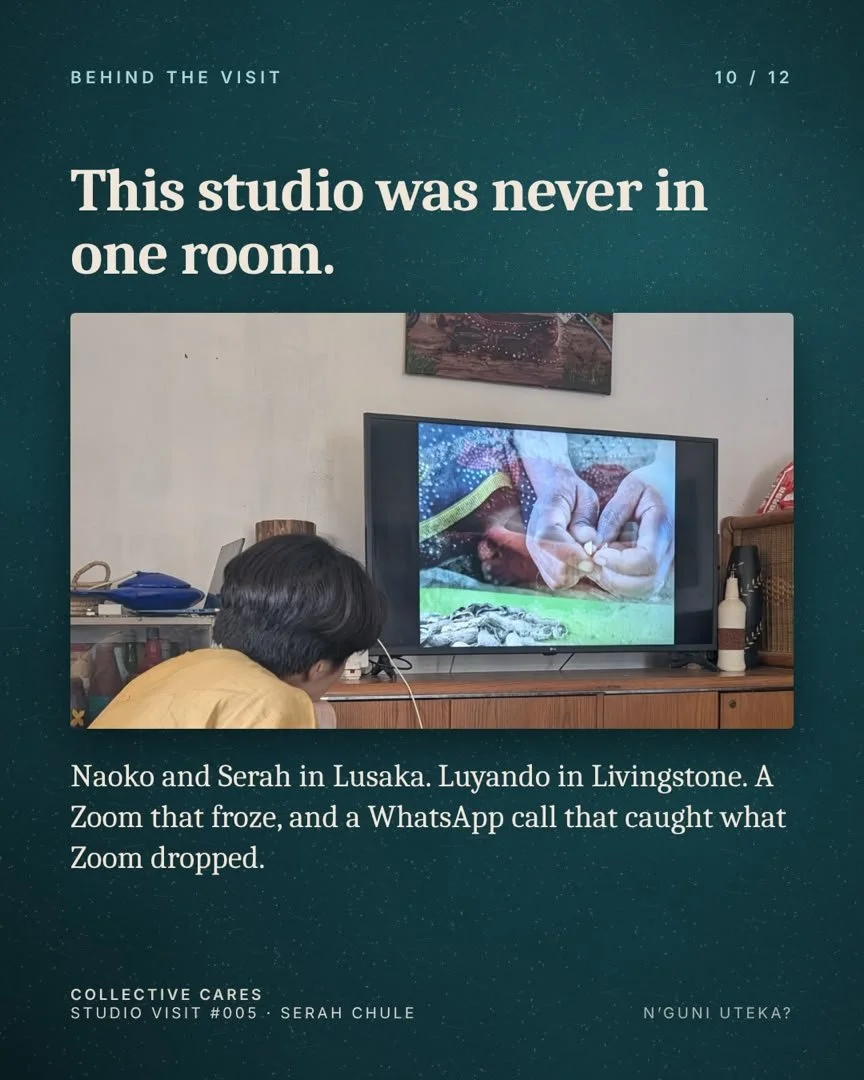
Naoko Mabon watching “Nguni Uteka” in Serah’s studio in Lusaka during the conversation, while Luyando joined online.
This studio visit was recorded with Serah Chule and Naoko Mabon, who sat in Serah’s studio in Lusaka, whilst I joined from Livingstone through a Zoom window that froze and a WhatsApp call that caught what Zoom dropped. The visit began in July 2026, when Serah was in Livingstone researching, and it has continued in pieces since. It is only now being gathered and archived, in October.
The way in is a question that is sung before it is explained: N’guni uteka? In CiTonga it asks who is fetching/drawing: drawing water, and drawing borders. It is the title of Serah’s video installation for the Mosi oa Tunya Perennial, performed by Maambo. This fifth studio visit uses that one video work as an entry point into Serah’s practice, and asks what a folktale can still do when it is retold for today, and how knowledge travels mouth to mouth, as story, song and gossip.
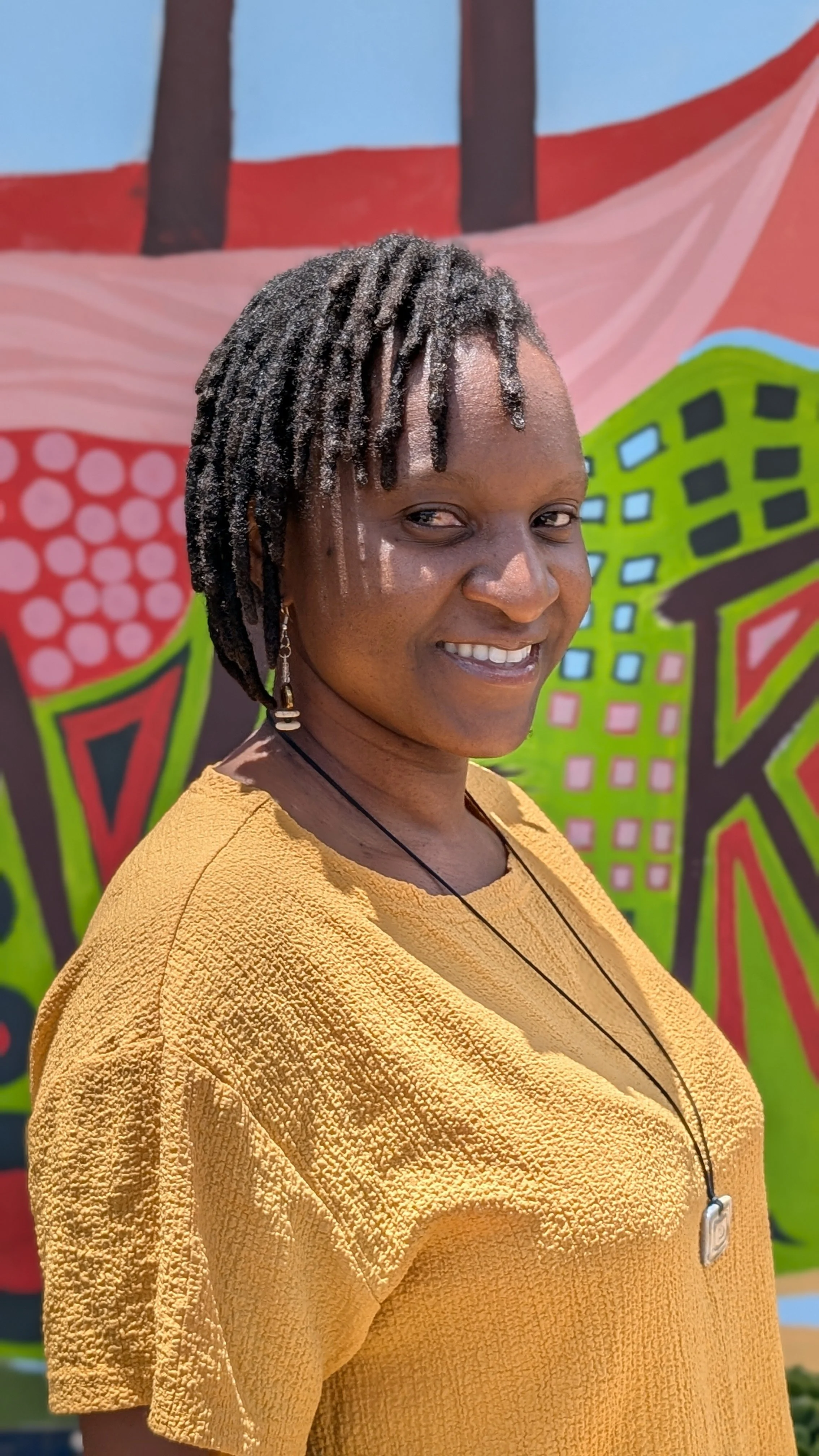
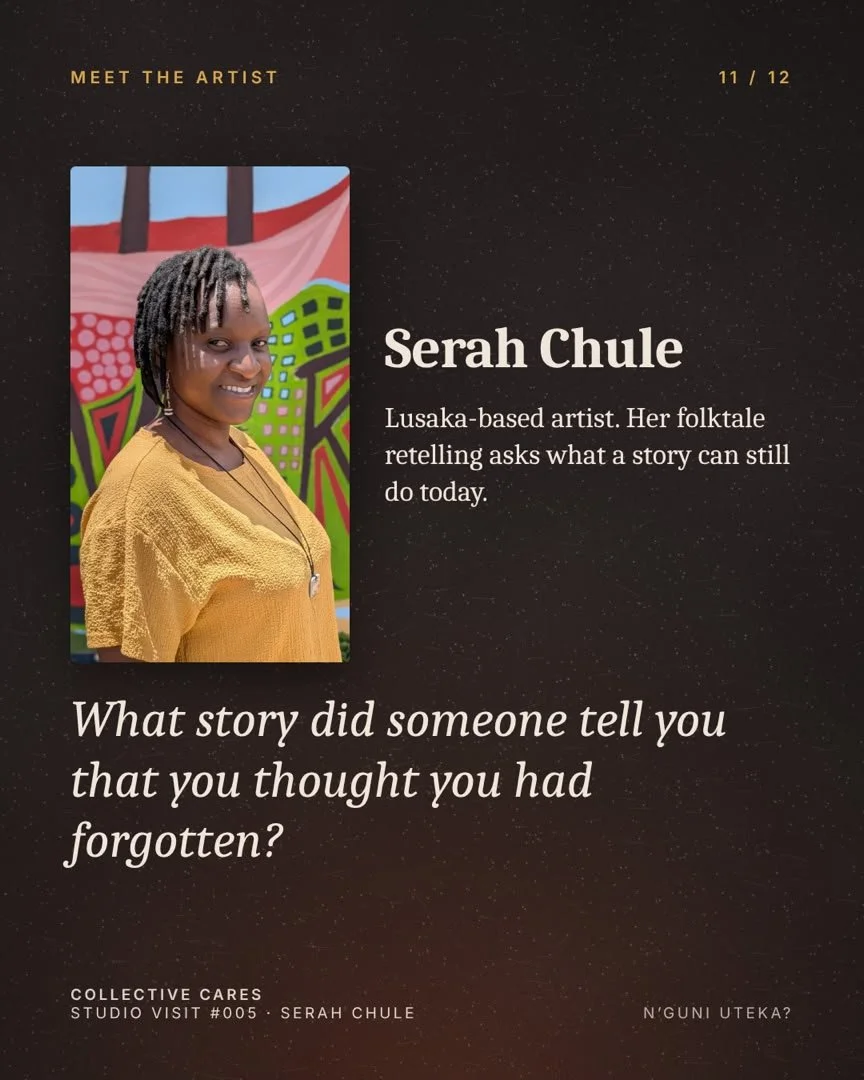
Serah Chule. Image courtesy of the artist.
Serah begins from song. “From my research, folklore has song to it. It uses song to communicate.” Her retelling follows two stepsisters. Namwinga eats the guinea fowl and blames Mweha. Namwinga’s mother whips Mweha. Her father does not ask what happened; he goes straight to whip and pound her, and hangs her on the washing line until the wind carries her into a river, where a crocodile restores her, then marries and cares for her. In our conversation the marriage read as a transformative moment, not an ending. With Mweha gone, Namwinga is made to do the house chores. Then, wanting to fetch at the river, Namwinga hears Mweha’s voice, and nobody believes her. What she heard, and what becomes of her, the story leaves for us to wonder about. N’guni uteka? is asked by the traumatised one. It asks what happens when the tables turn, as they eventually do, and the one who was first hurt calls the other to remember what they did. Read with its second meaning, the question widens: who draws the line around who belongs in the house, and who goes down to the river to draw water from what that line has cast out?
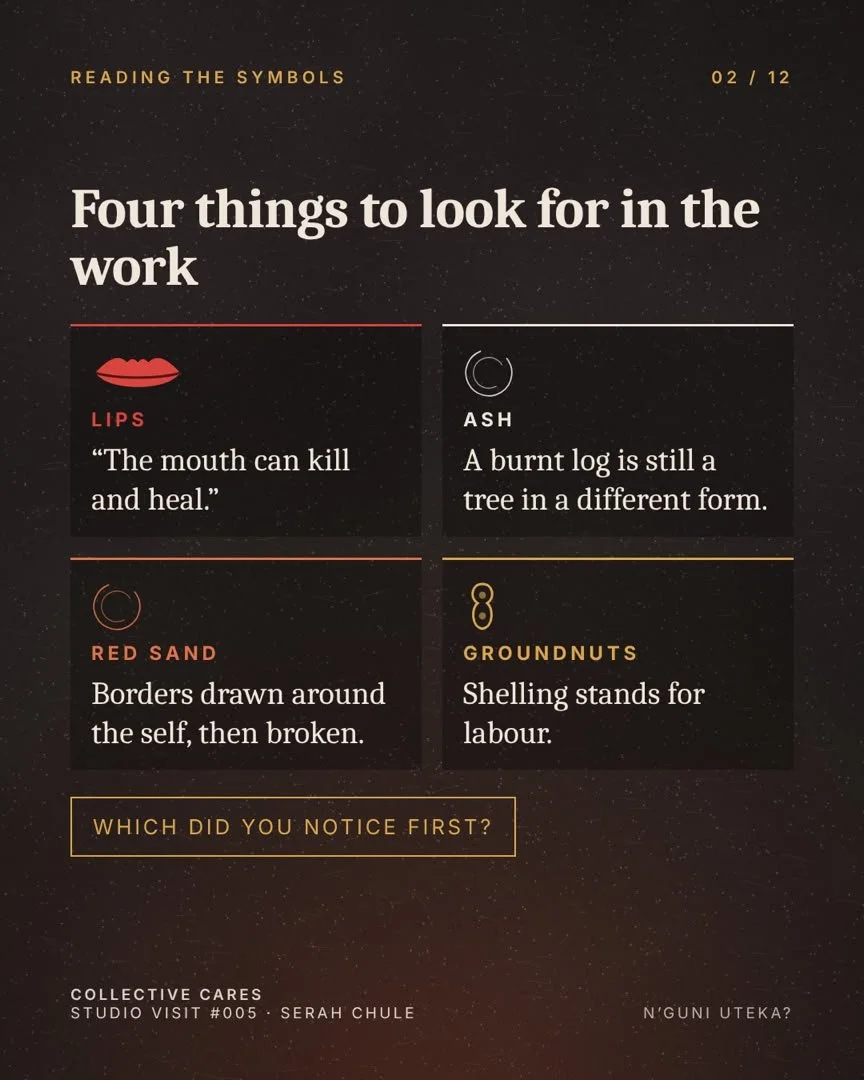
The lips carry the installation. “The mouth can kill and heal,” Serah said. “What killed Mweha were the words of her sister.” Naoko added that if the pounding is read as verbal abuse, that too shows how the mouth kills. The washing line becomes an image of being aired in public, left out in the wind, which Serah linked to gossip about mistreatment. Read this way, the folktale studies how words travel and who is believed. Namwinga’s accusation is accepted without a question; her later testimony of a voice at the river is not. The Perennial itself is titled Sonic Solidarities: Legacies, Histories and Other Gossips.
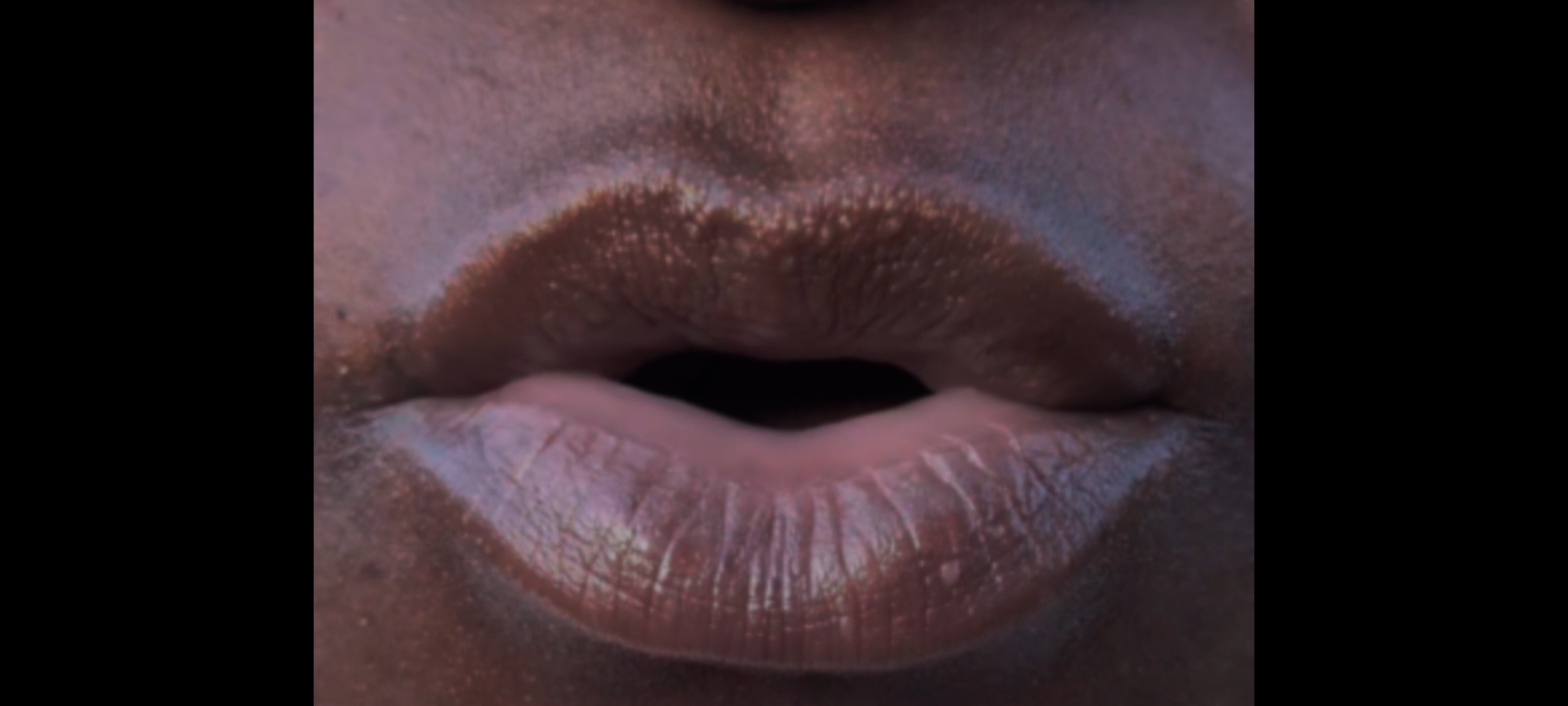
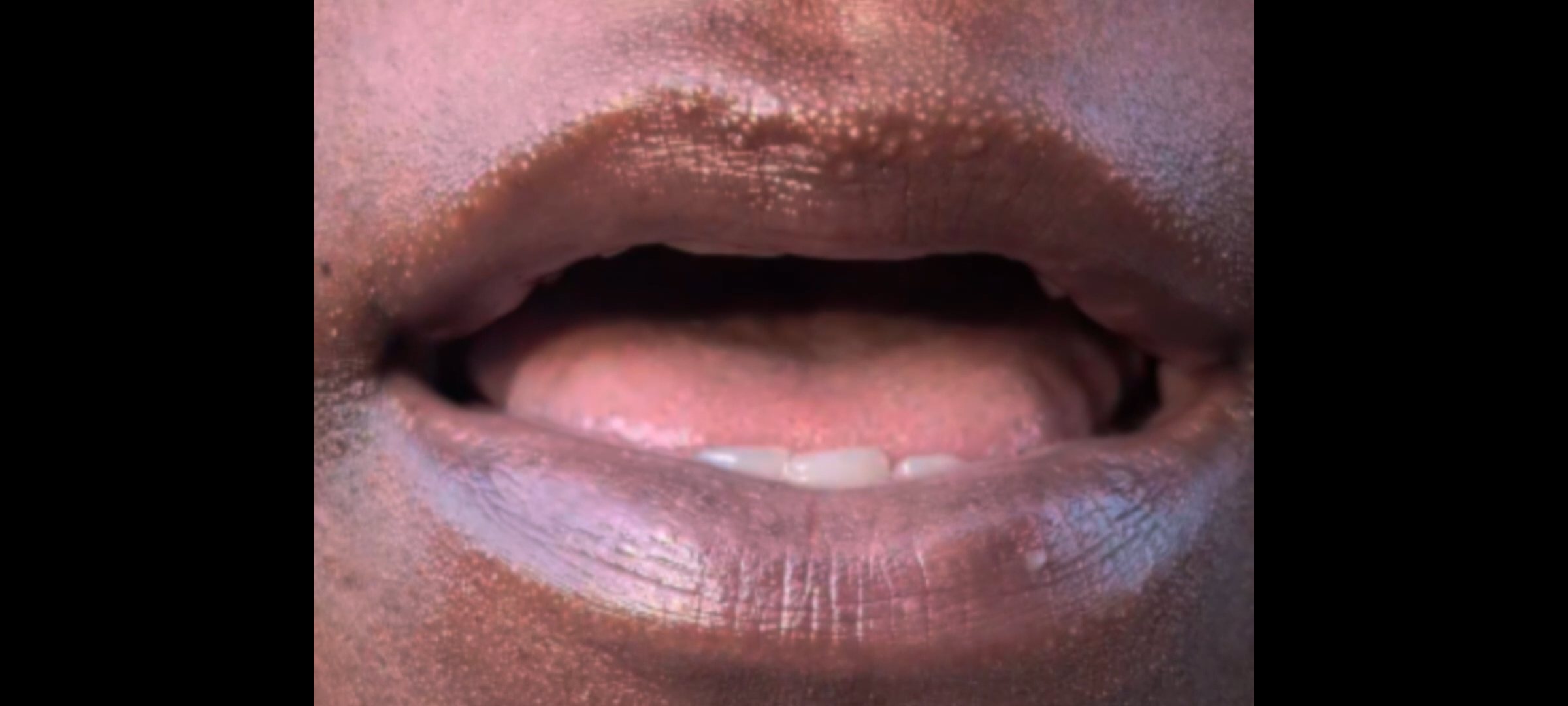
Stills from “Nguni Uteka” by Serah Chule, performed by Maambo. Images courtesy of the artist.
“The mouth can kill and heal.” Serah Chule
But the lips do not only kill. Serah chose ash and lipstick deliberately. When you burn a log, she explained, we think that is the end of it, but it is still a tree in a different form. Mweha’s family thought they had killed her; she went on and was transformed, to a better place for her. Resuscitation, rather than revenge, is the hope the work holds.
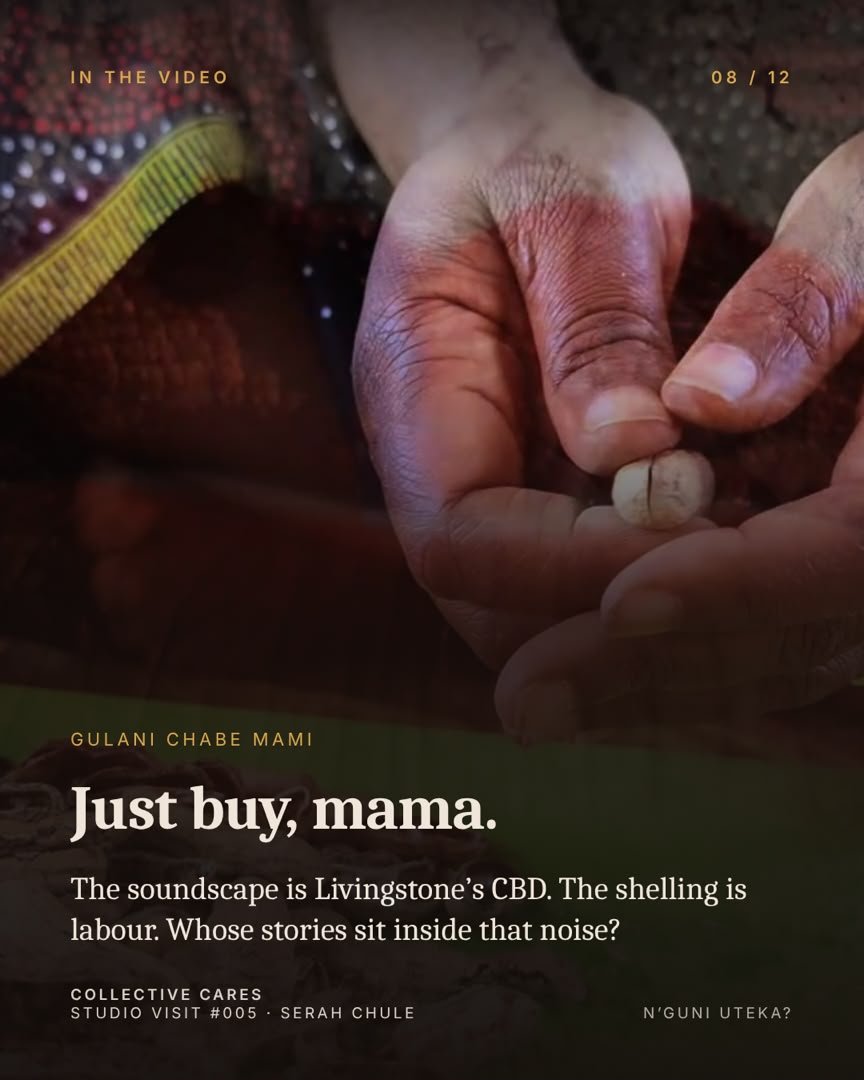
In the video, Serah told us, the groundnut shelling represents labour. The soundscape is the busy, noisy trade of Livingstone’s CBD, and near the end a male voice insists gulani chabe mami, just buy, mama, for Serah the hustle of everyday life. Maambo, who is Serah’s voice, drags herself from the home into those streets, carrying the trouble that began at home out into public. In red sand she draws borders around herself, and then begins to break them. Here the second meaning of uteka becomes visible: she is the one drawing.
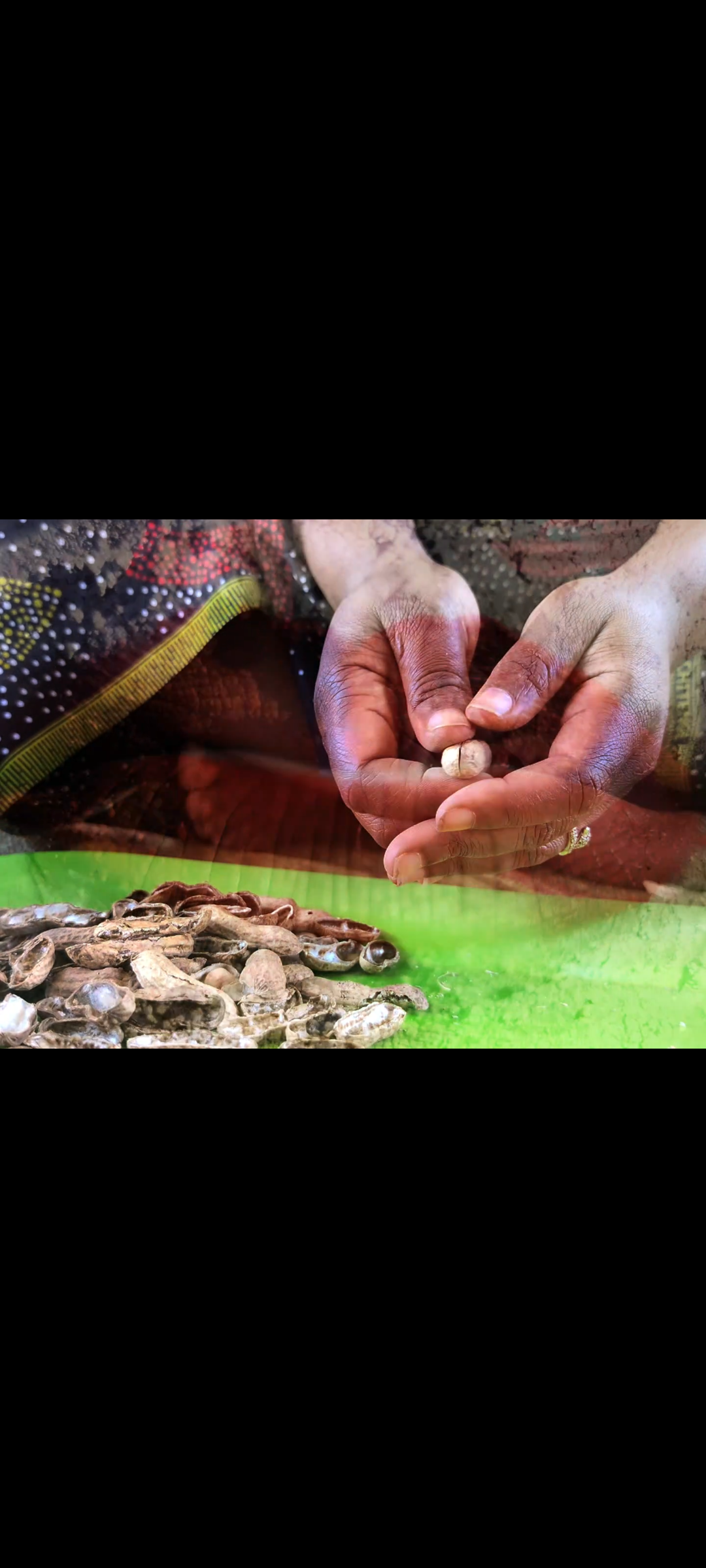
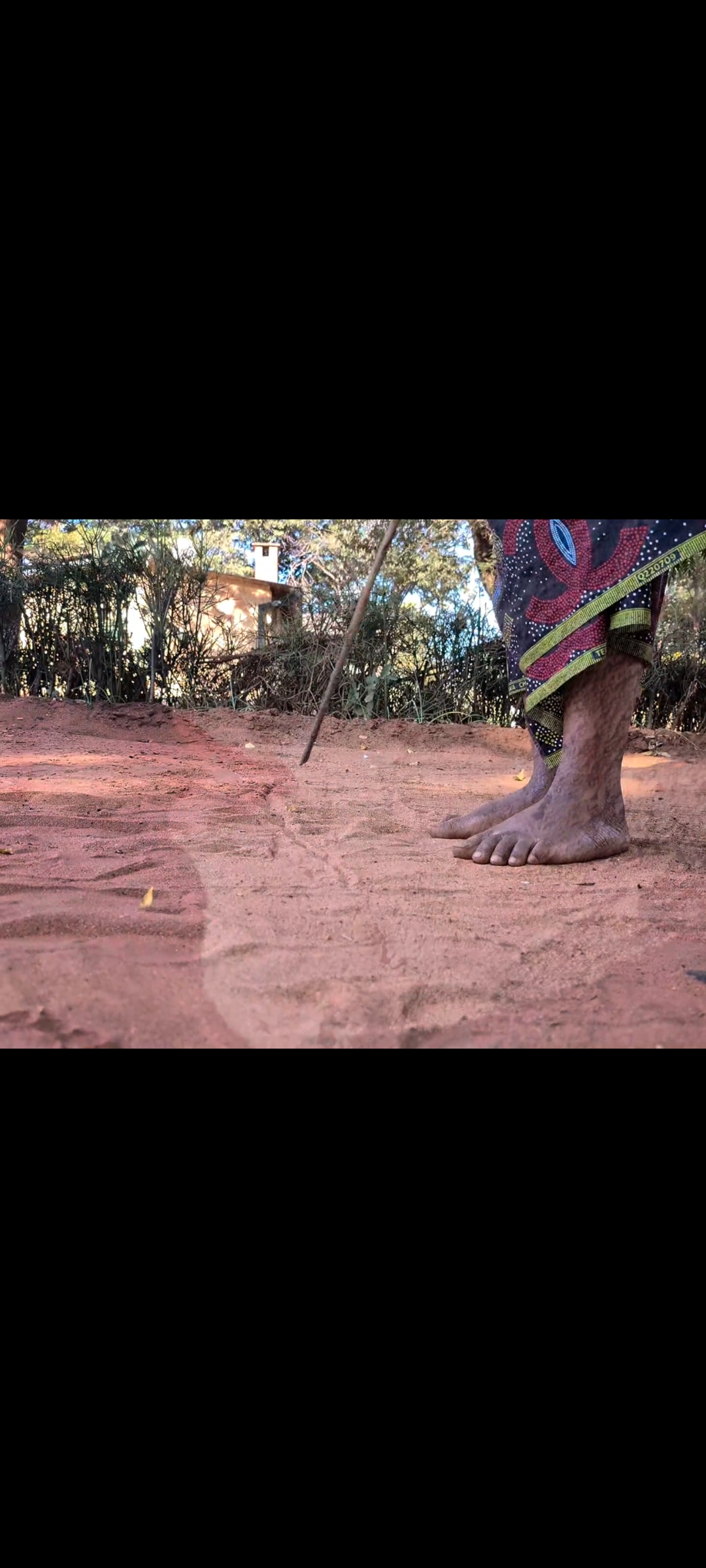
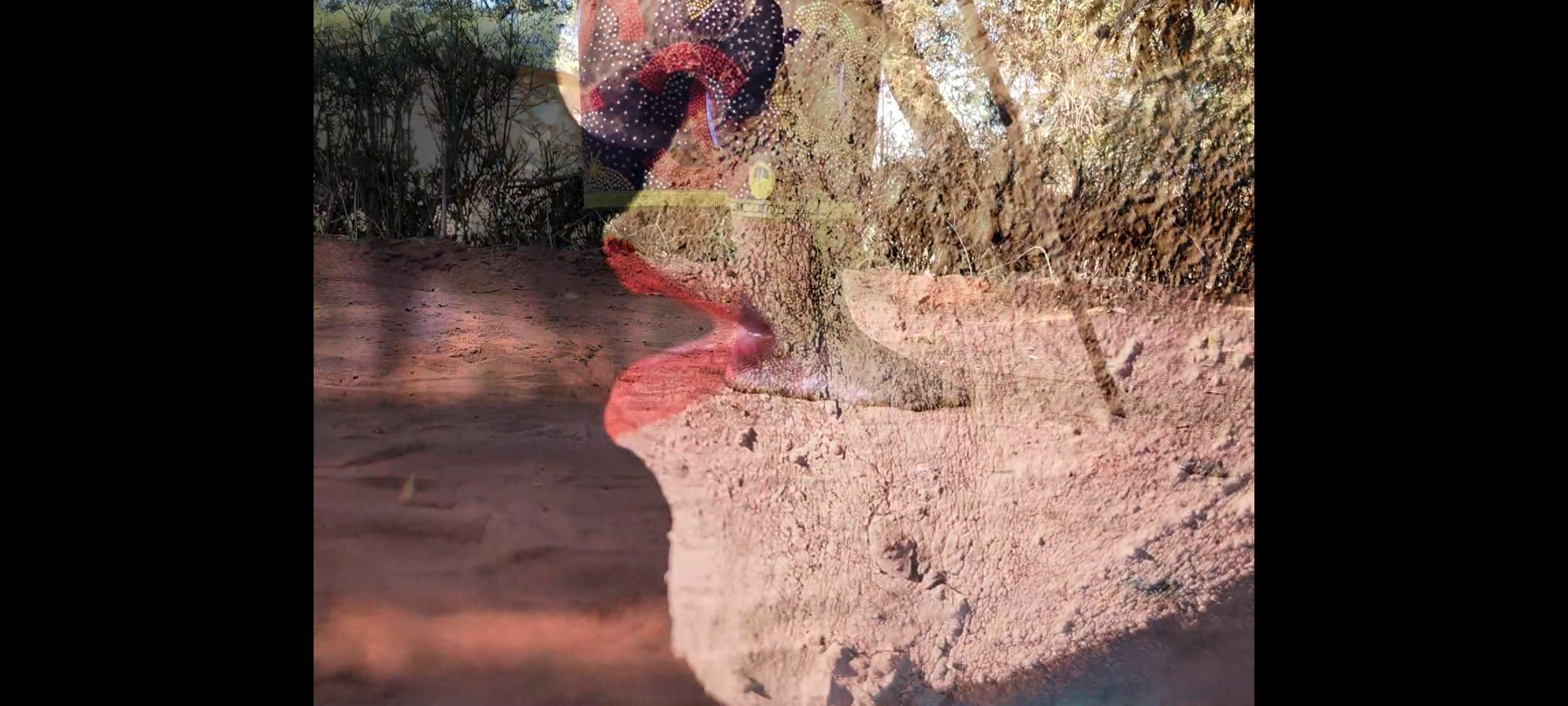
Stills from “Nguni Uteka” by Serah Chule, performed by Maambo. Images courtesy of the artist.
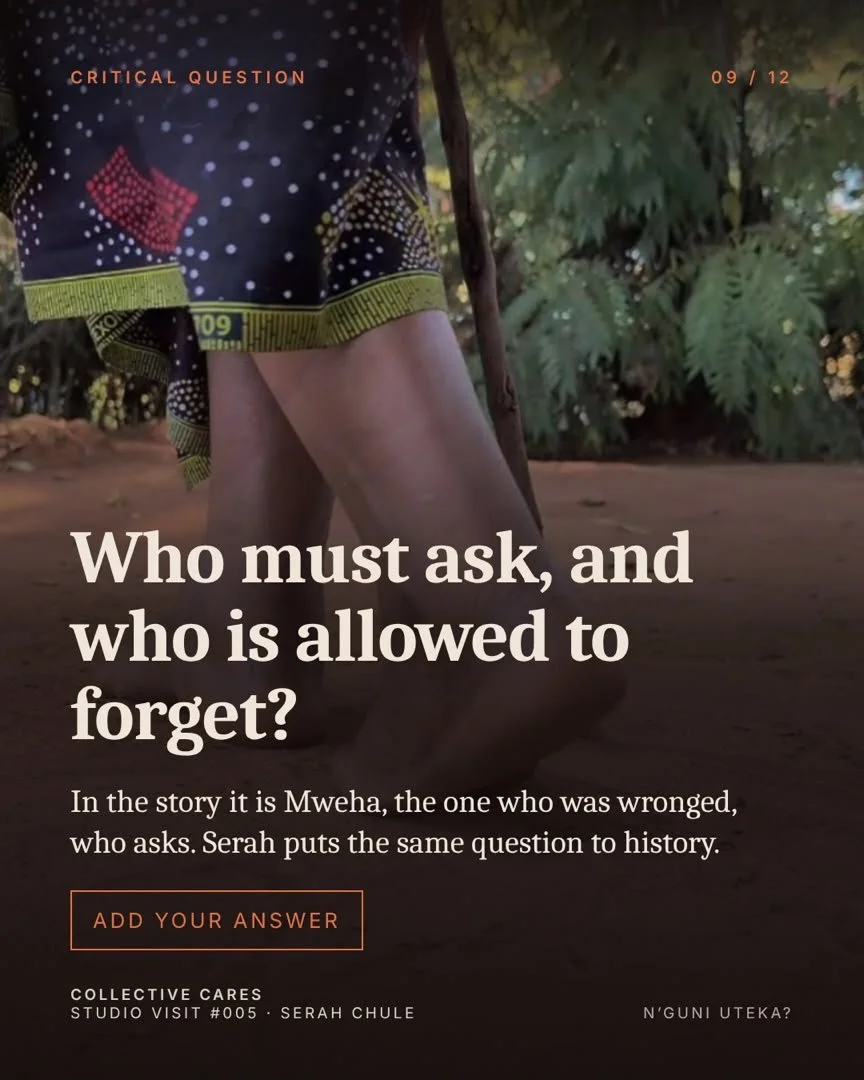
“My personality is such that it confronts and challenges things that some people like to hush and keep quiet,” Serah said. She confronts so that the thing does not eat her up or resurface. Here the question of reckoning sharpens: who must ask, and who is allowed to forget? In the story it is still Mweha, the one who was wronged, who asks. Serah puts the same question to history. Yes, colonialism happened, so should we forget about it? What certainty is there that, if she does not call it out, it will not be done to other people? And Mweha’s father never asked what had happened. Should we not question things when things go wrong?
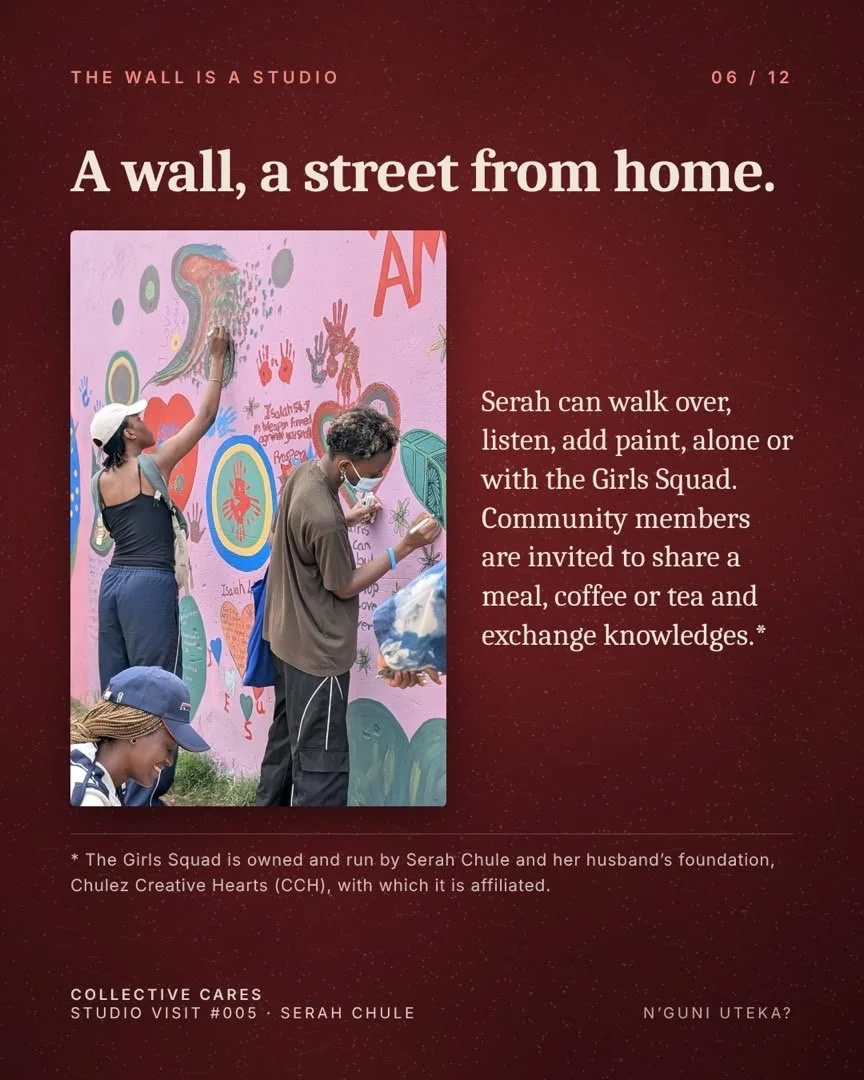
Naoko asked us not to overlook what seems small or personal: a folktale that begins in one woman’s life becomes a global relational story when you look closely. Out of the same instinct Serah started the Girls Squad*, to organise girls and young women in her community and explore healing together, recognising in others the traumas she has known herself.
Serah describes the mural project as an extension of her studio. The wall is a street from where she lives, so she can walk over casually, listen, and add paint, alone or with the Girls Squad. The wall is a shared studio, and an invitation: community members come to exchange knowledges over a shared meal, coffee or tea, and the painting sessions are held as a therapeutic process.
* The Girls Squad is owned and run by Serah Chule and her husband's foundation, Chulez Creative Hearts (CCH), with which it is affiliated.
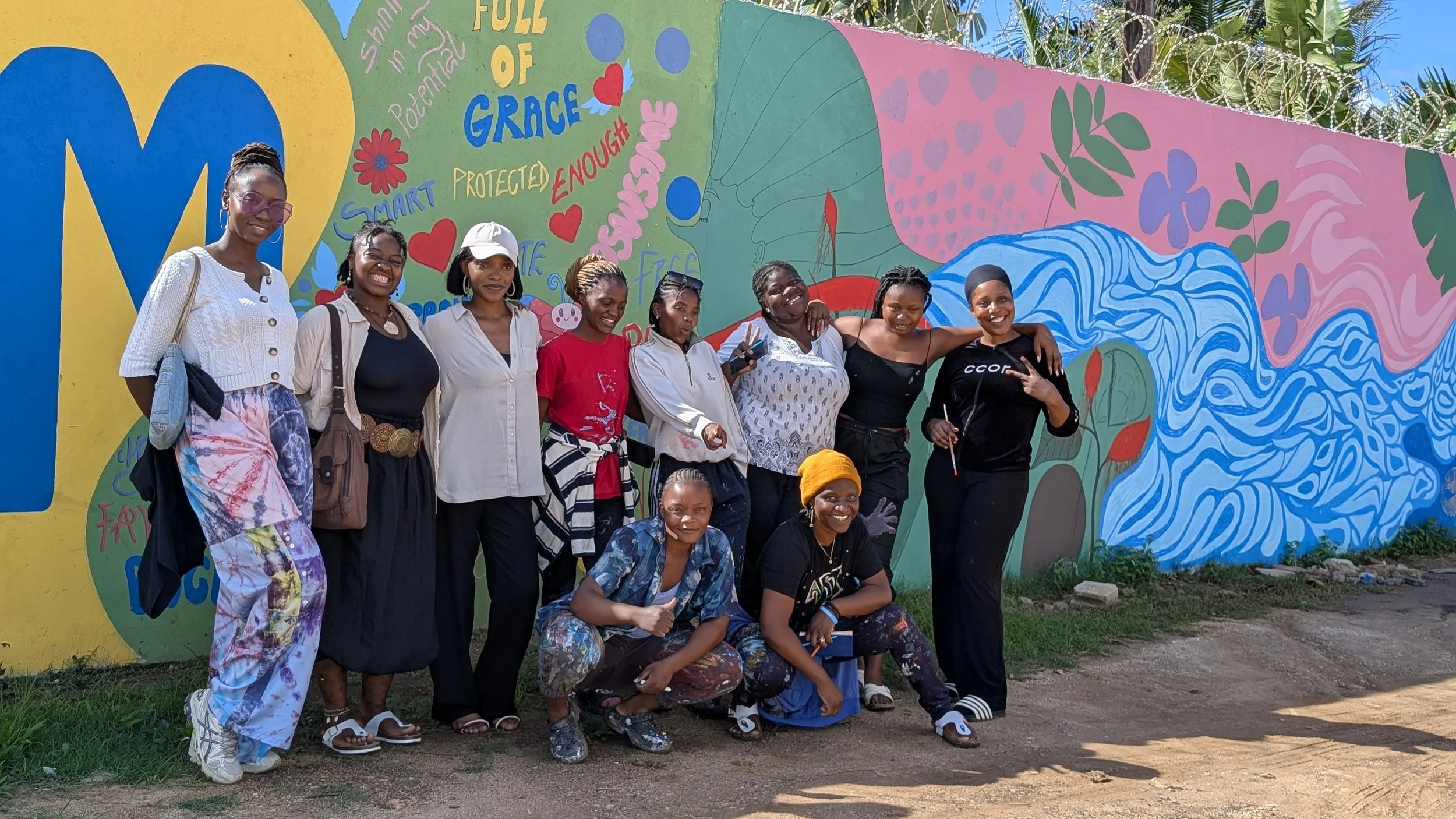
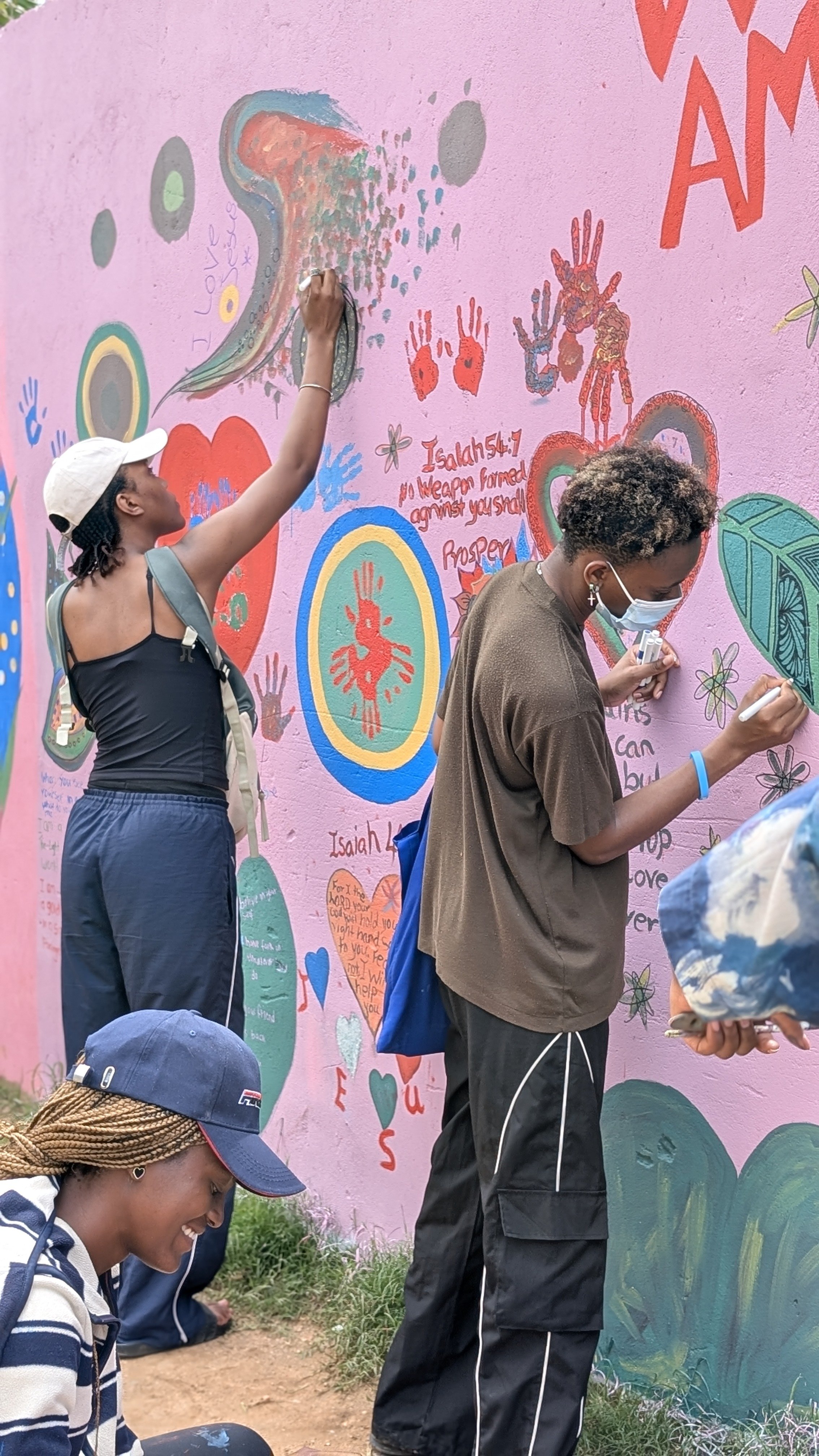
The mural project: the wall as shared studio. Images courtesy of the artist.
I want to set the wall beside the groundnut shelling. The women who shell in the video are labourers whose narratives are suppressed, drowned by the hustle of the CBD. The wall asks a different thing of the street: girls put words, hearts and handprints in public, in their own hand, where nobody can talk over them. Is the wall where the stories the shelling carries get to be told? That is my reading rather than Serah’s, and she may correct it.
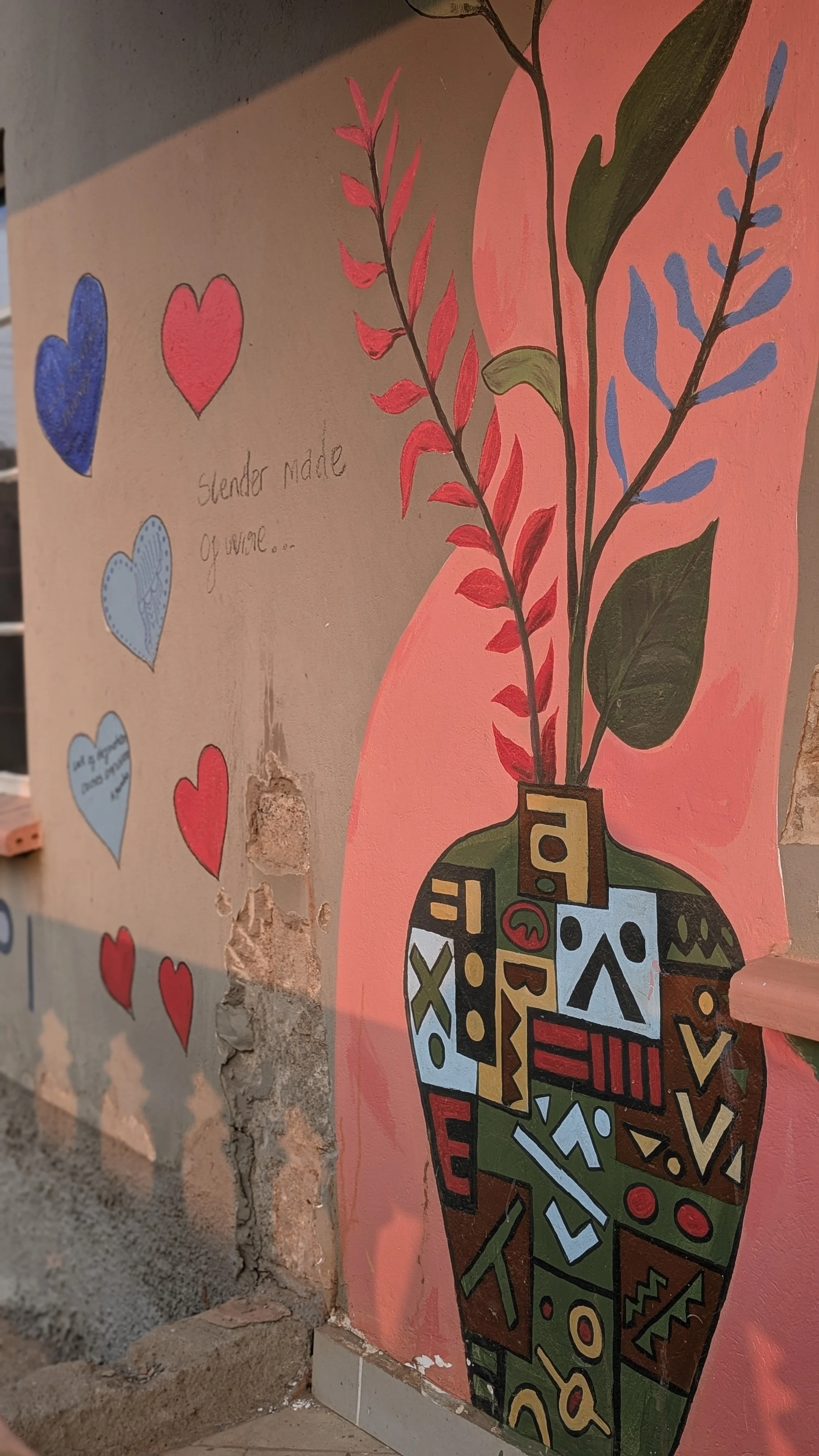
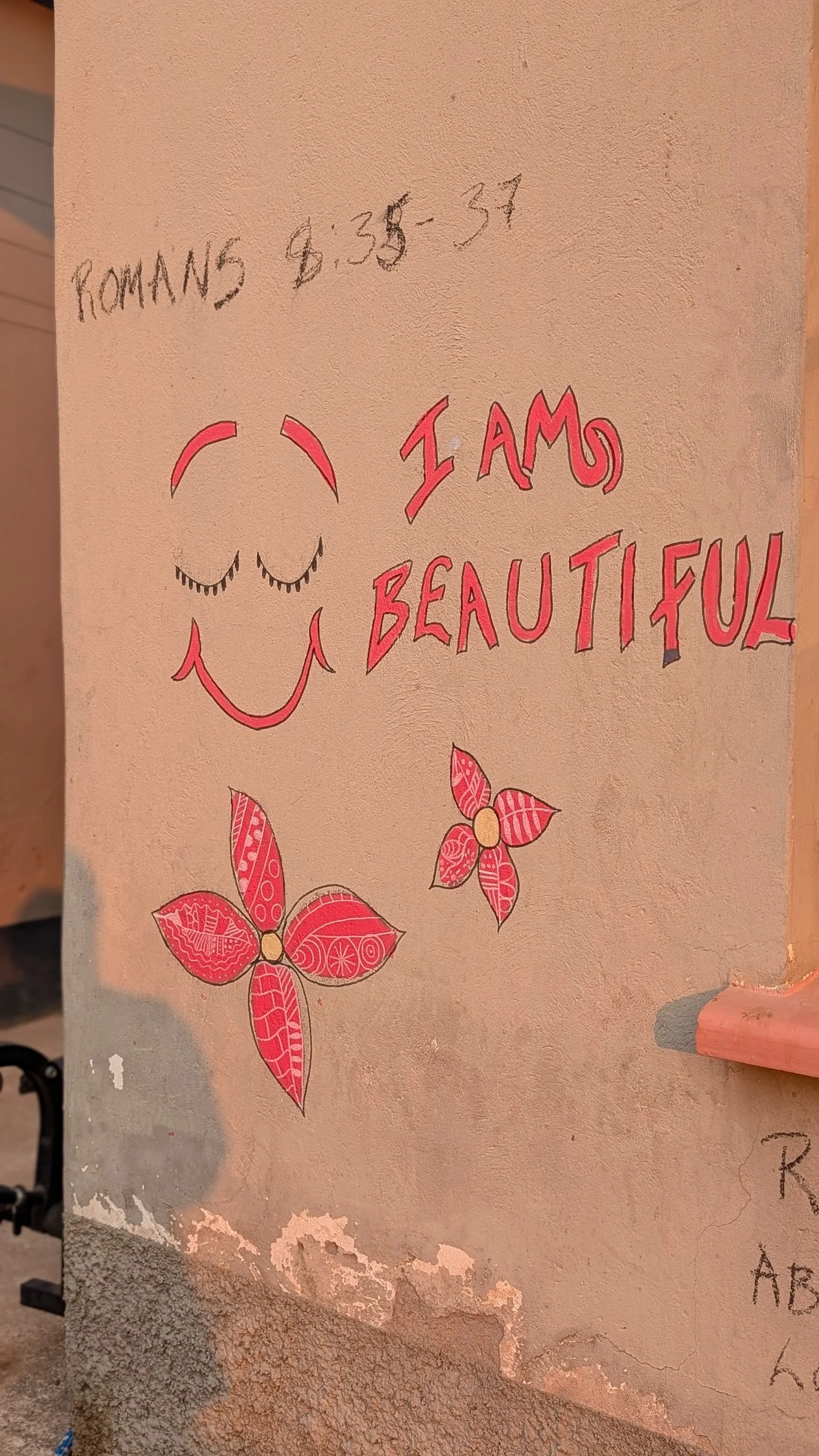
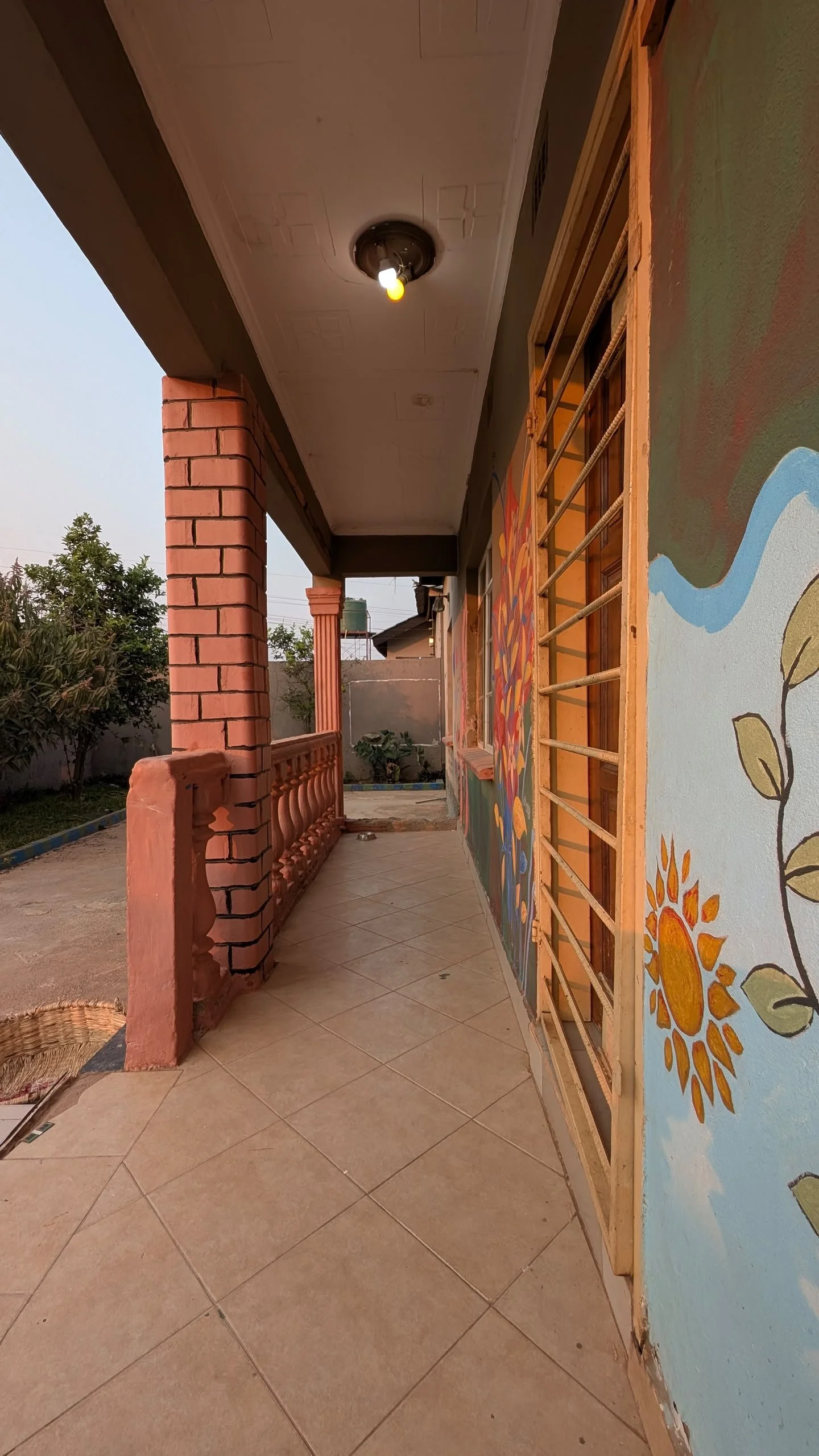
Murals made together with the Girls Squad.
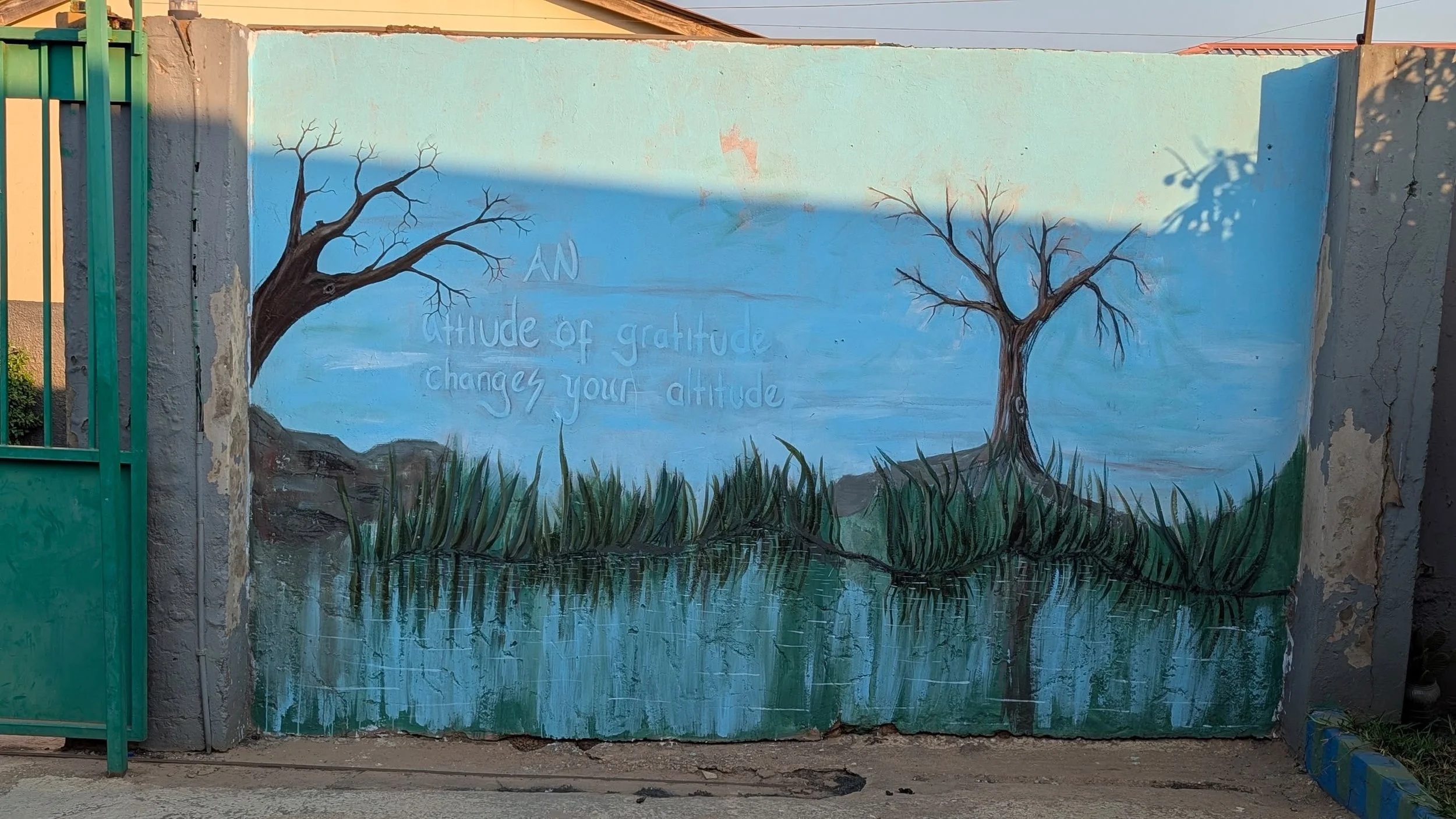
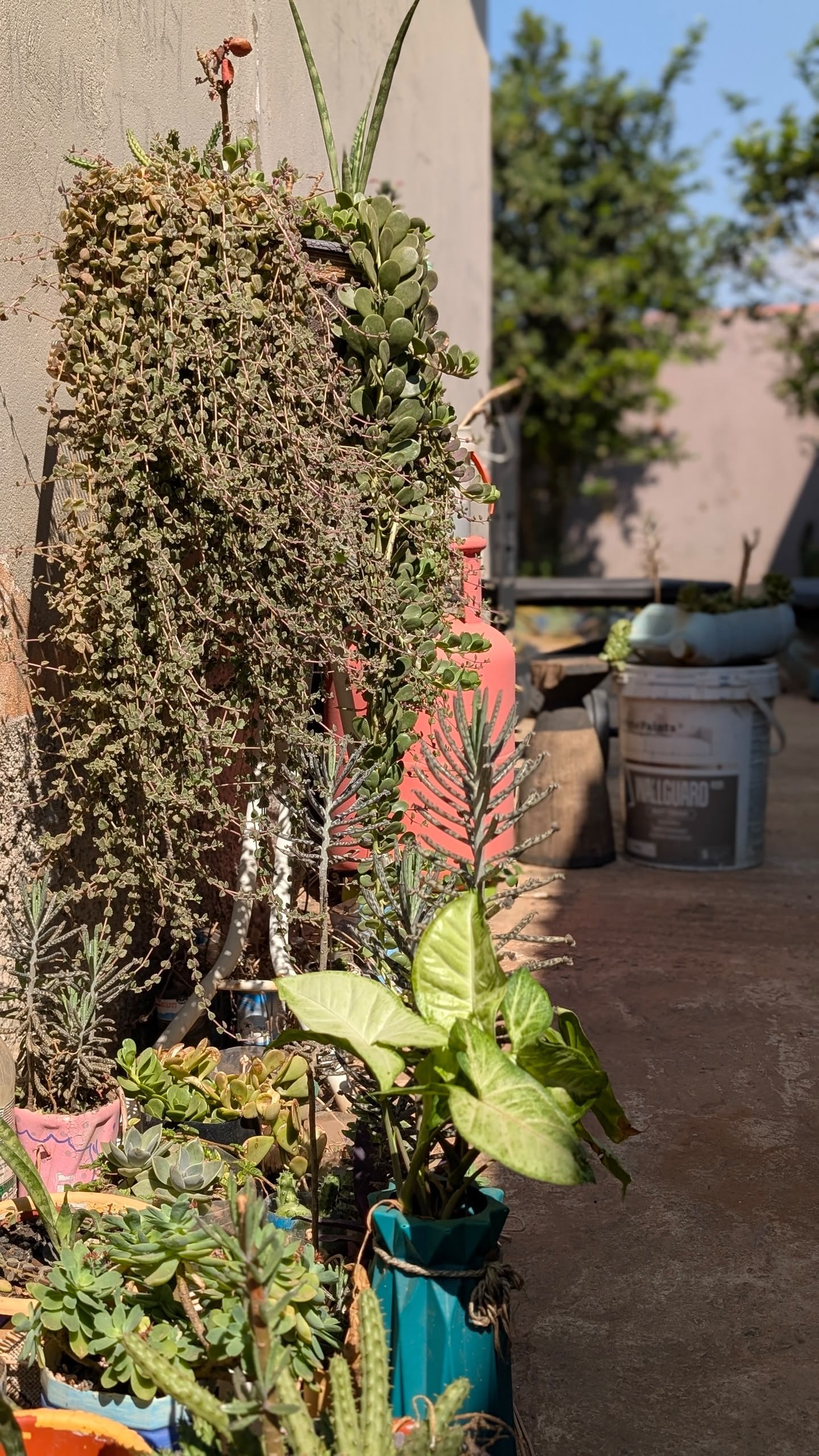
Left: the gratitude mural, made together with the Girls Squad. Right: plants. Images courtesy of the artist.
Our conversation turned to archives. Naoko holds two thoughts at once: that we must document how we live for the next generation, and that we should question whether everything needs to be captured, because someone must look after it, and it becomes a burden for those who come after. Serah answered that the most authentic archives are not in the museum; they live in our bodies, carried and retold, much as gossip is.
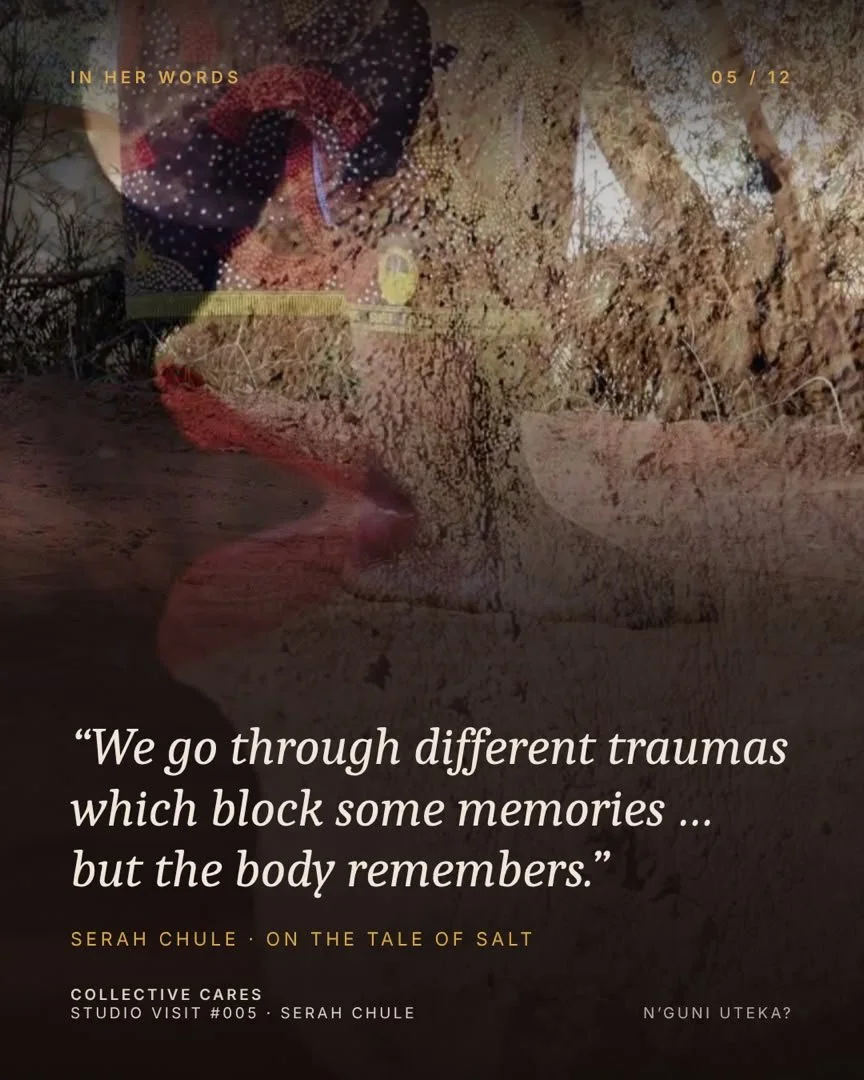
She then proved it. Early in our call I had shared a SiLozi tale, Ndataho, ki ndataho—Your Father Is Your Father, which I learned from an elder in Livingstone. Serah said she had forgotten most of her mother’s stories, yet another surfaced mid-conversation, not clearly. A king wants to marry off his daughter and calls for suitors to bring gifts. People bring valuable things; one man brings salt, and the king insults him. The story blurs. At the announcement dinner the young man serves the king food without salt. When the king asks why, the young man asks him a question in return: do you see the importance of salt? In the end he brings salt to the king’s food and marries the princess. “We go through different traumas which block some memories … but the body remembers,” Serah said. The lesson, as Serah tells it, is the importance of the thing dismissed as small. It also rhymes with Mweha’s: the insulted and the wronged both answer with a question, not a blow. The tale returned because another was told: folklore rejuvenating memory, as Serah hopes.
“We go through different traumas which block some memories … but the body remembers.” Serah Chule
I do not think this is a closed reading. How does Mweha’s story speak to global reparations narratives, where the one who was wronged is still the one asking for the reckoning? Is gossip a failure of truth, or the archive that official histories refuse to keep? And what do we risk when screens replace the mother’s way of teaching?
Writing this, I notice that I am in a similar process: closing myself up, and then slowly re-opening, which is never finished. I watched Maambo draw borders around herself and then break them from a screen in Livingstone, and still something in my own body answered. Through Serah’s work, another work at the Perennial, Metanoia, which will activate in its own way in November, came into clearer focus for me, and I invite readers to watch for it. N’guni uteka? Who is fetching/drawing? Perhaps the title of this entry is the answer: you get what you ask for, only gradually, and with the lessons you need to sustain it.