

Relational #001 - Lifang Zhang
We Are Foreign Everywhere. And Make Peace With It.
by Naoko Mabon
It is not uncommon for Japanese people abroad to be greeted with ‘你好 (Ni Hao)’ in Chinese. In Japan, there is even a term for this – the ‘Ni Hao Problem’ – and on social media, one often comes across posts reflecting on and discussing this experience, the sense of unease it causes, and what the ‘correct’ way to respond might be. About twenty years ago, whilst I was studying English in England, groups of young men would sometimes tease me by saying ‘Ni Hao’ with a smirk, and on the worst occasions, they would even spit at me. However, after moving to Scotland, the occasions on which I encountered the ‘Ni Hao Problem’ gradually diminished. The combination of reasons for this is probably because I became more ‘localised’ or perhaps more brazen (haha). But also, I feel that we have learnt more about racism in society at large in recent years (or at least so I would like to think), particularly following the murder of George Floyd and the subsequent Black Lives Matter movement. It may also be due to the fact that I am constantly involved in the arts and immersed in so-called ‘lefty’ circles and algorithms. Anyway, I began to forget the way that single phrase used to unsettle me.
In June 2025, I spent about a month in Zambia. When I encountered that smirking ‘Ni Hao’ for the first time in ages, I was taken aback to my own surprise. As had been the case in the UK, based on my own experience, it was usually groups of young boys. Another unforgettable greeting was ‘Hey, panda’. Although I am only about the height of a twelve-year-old junior, I am in my mid-forties and, as an adult, had no idea what to say or how to behave towards these young people; I could do nothing but walk away quickly in silence, and that sense of pathetic helplessness lingered with me for a long time. I even thought, ‘Sorry all my fellow Asians,’ wondering if this might have been a chance – albeit on a small scale – to dispel the preconceived notion that ‘Asians are meek and won’t fight back even when mocked,’ as was often said during the racism against Asians during the pandemic.
My fluster was probably partly down to a lack of mental preparation, but looking back now, I think it was surely because I had arbitrarily placed expectations on others and, just as arbitrarily, ended up feeling disillusioned. It is something I always bear in mind when entering a new place to work: ‘I wasn’t invited in the first place. I am a foreigner who has turned up of my own accord and is getting in the way, so I must show the utmost respect for the culture and way of life that already exist here, and focus on listening and learning.’ As it was my first visit to the African continent, I came to Zambia feeling nervous and serious. So, perhaps the reason I was taken aback was that I didn’t receive a return commensurate with the sincerity of my respect, and felt as though I had been let down by a promise I hadn’t even made. It was simply a case of reaping what I had sown. A self-imposed sense of victimhood.
Another reason was my own ignorance regarding the long-standing relationship between Zambia and China. Had I possessed more background knowledge about the relationship between the two countries – which has continued for over 60 years, ever since right after Zambia gained independence in 1964, including China’s support for the construction of the TAZARA Railway linking Tanzania and Zambia in the 1970s, and the full-scale entry of Chinese companies into Zambia’s mineral and energy resource industries from the 1990s onwards – I would surely have been able to understand the ‘proximity’ that led people to spontaneously greet me with ‘Ni Hao’ upon seeing my face on the street – and I would not have fallen prey to a victim mindset by unconsciously internalising it. However, my visit coincided with a time when, just a few months earlier, a dam storing waste from a copper mine had burst, causing millions of litres of highly acidic substances to spill into waterways. This resulted in mass fish deaths, the contamination of drinking water and the destruction of crops, with some 300,000 households in the copper mining region suffering severe damage. As the dam was owned and managed by Chinese-owned companies, it was also a time when I myself was hearing negative opinions and views from local people towards Chinese companies and, by extension, Chinese people. Against this backdrop, I may have been particularly sensitive, given that I have a face that could easily be seen as a person from China.
“I understand that feeling. I entirely understand. And I can get emotional and overthink too.”
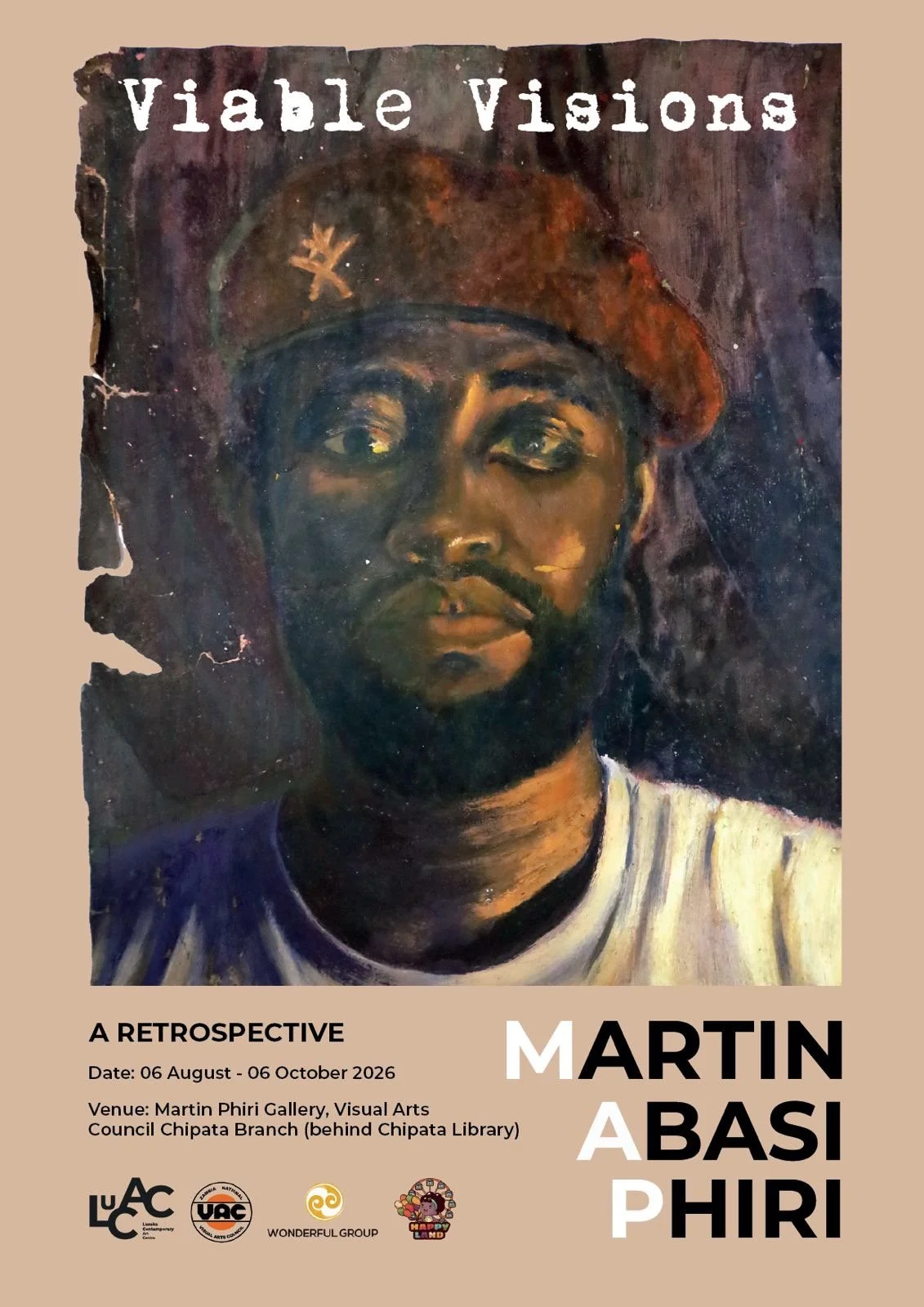
Poster image: Martin Abasi Phiri, Self-portrait, 1980s. Designed by Augustine Kagimu.
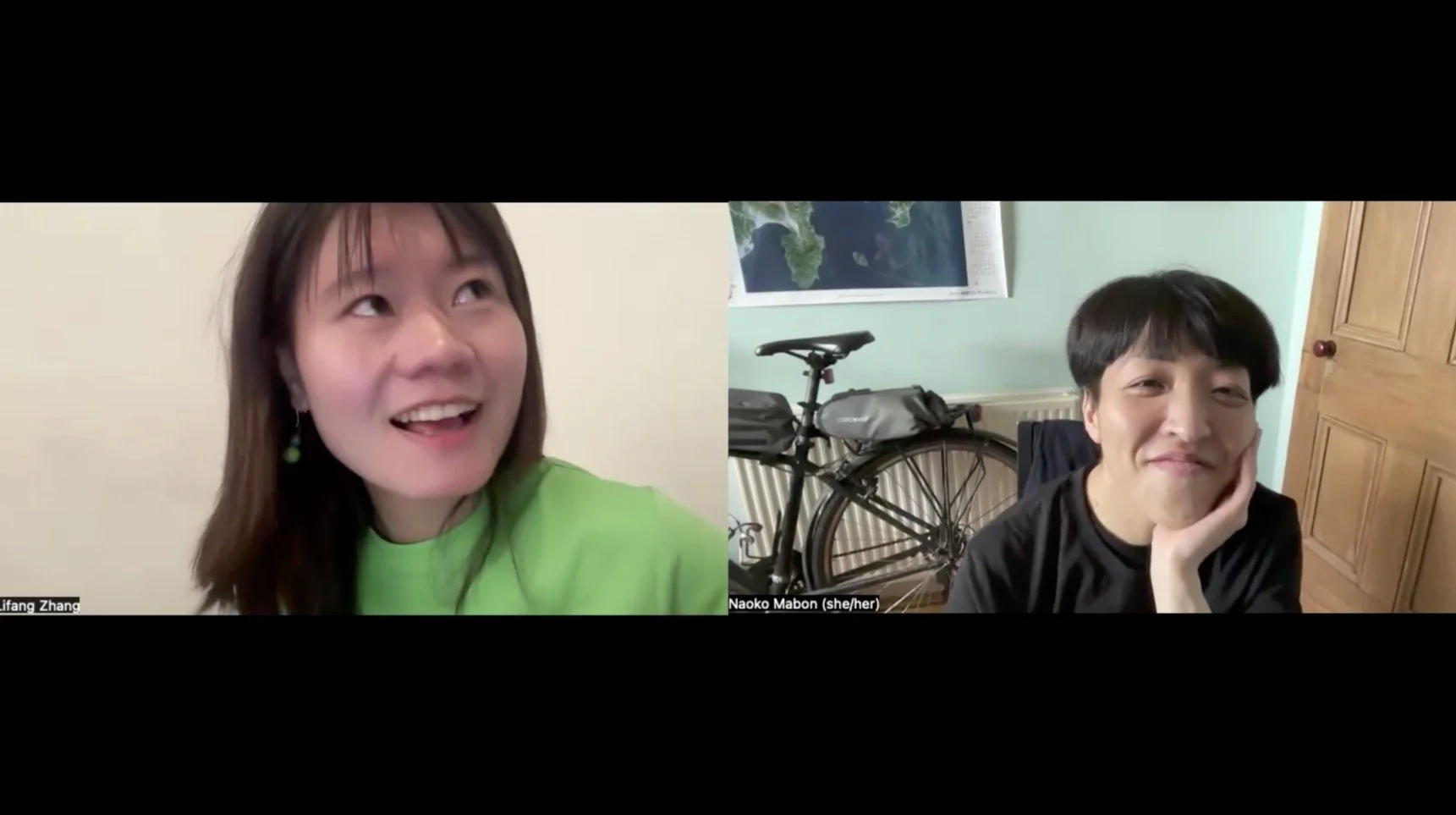
I asked Lifang, who is currently busy working in Lusaka, to spare some time to meet with me online because I wanted to hear about the touring exhibition Viable Visions, a retrospective dedicated to work by Martin Abasi Phiri – which had just opened in Chipata, Eastern Province, the artist’s hometown – following the 2025 exhibition in Lusaka as the culmination of her research, which she has been conducting since 2018. However, I must confess that, as a Japan-born person hoping to nurture long-term relationships and collaborations with those involved in contemporary art in Zambia, I also wanted to hear about the activities and experiences of Lifang – who was born in China, studied in South Africa for seven years, and has been deeply involved with Zambian artists and their work. It wasn’t that I was seeking sympathy, but when Lifang asked, “Have you come across people who really see you as an enemy?” and I hesitated, unable to formulate a clear reply – saying, “Not directly, but, well…” – the tone of her voice as she spoke the words above seemed to gently soften my tension. It is certainly true that I felt safe in the online space with Lifang, who I share the common physicality of being a woman from East Asia.
“Maybe sometimes the Chinese-ness or Asian-ness is not really about what you have done, but what other people with the same skin have done, [affecting] people around you and how they look at you, and making you more conscious. It’s very difficult, but slowly I’m also learning to separate myself from that. If I apply that to myself, possibly I will apply the same logic to other people. So, for me, I would love to learn to be mindful, but I should also learn to separate. At the end of the day, I look different, and so what? Having lived in different countries, of course I look different and I behave differently. We are foreign everywhere,” remarked Lifang.
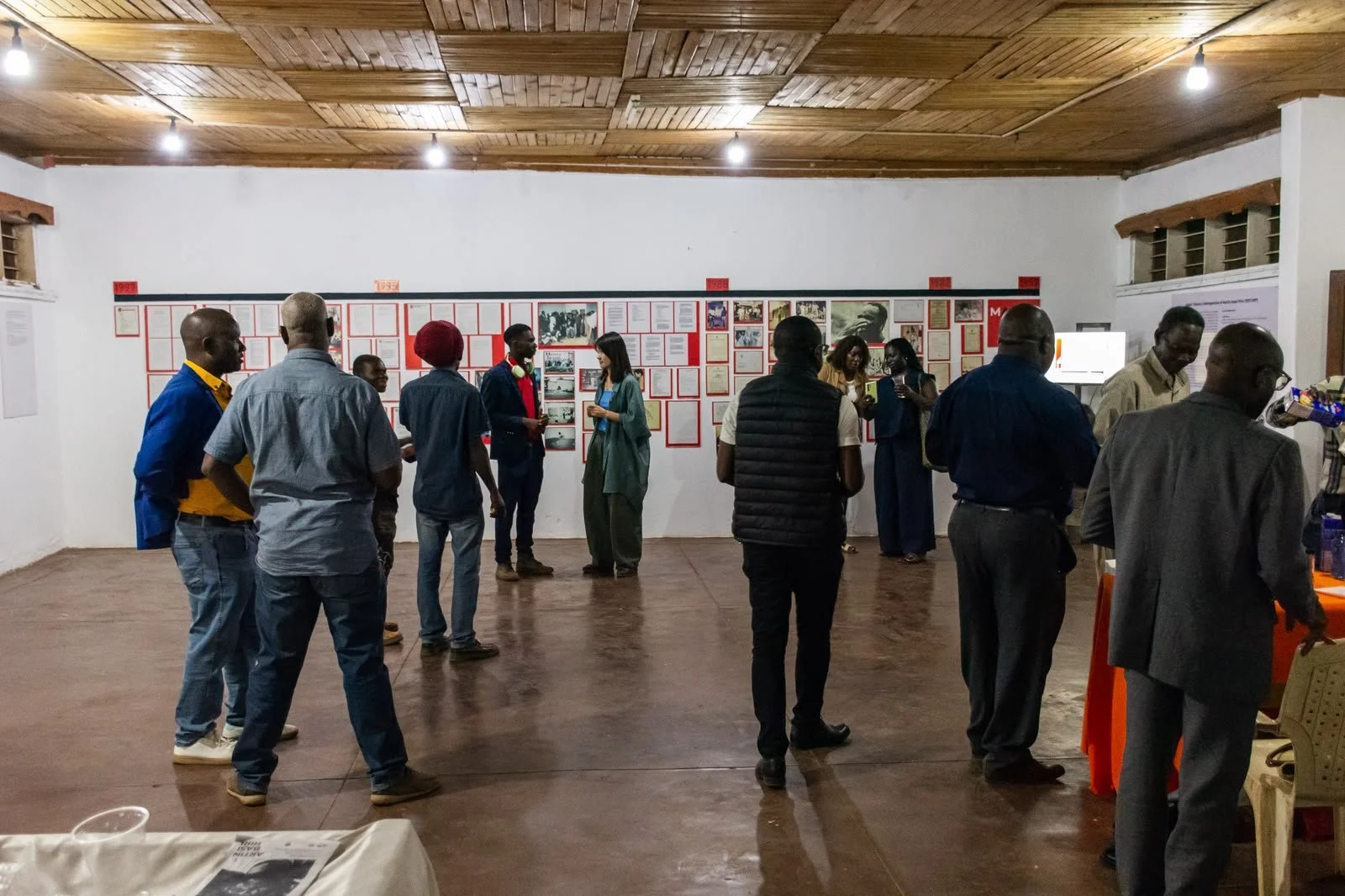
Image Credit: Alex S
She went “Some family members or your friends say, oh you’re a bit different now, or oh you have changed. I actually have a lot of friends saying, I’m the same. But I know it’s different. I know I think differently. I know I now have a different perspective, and I have a different relation to things and events that are taking place in China compared to those who were all around throughout. I was absent from China for seven years when a lot of changes were taking place. And that seven years is a time that really, I think, carved my thinking, shaped my thinking. It’s because, you know, between mid-twenties to early thirties is an important time for a human being’s transformation, isn’t it? Whatever I learned here [Africa] has become my reference. It has changed my way I look at the world whenever I’m going. And then maybe I’m in the new process of relearning about China, and then later will affect my ways of seeing and thinking and doing here [Africa] as well.”
Lifang added, “Tesfaye Urgessa, artist from Ethiopia, who made an exhibition at Red Brick Art Museum in Beijing said in a panel discussion, once you are foreign, you are forever foreign. You are always foreign. And I agree with him. I'm already at peace with that. Most of the time, I think I enjoy that. Space of thinking in-between, I enjoy that in-between-ness. Also it’s a privilege to be able to move around and to have such in-between space. Even when we are staying in one place, we experience people’s perceptions which may be something that you feel uncomfortable with. I think it’s common that people have different perceptions of you. Everyone experiences being foreign whenever they travel, but at the same time, it’s really a privilege to be able to travel around. So in general, I feel lucky that I can do that. I’m at peace with being foreign. There will be moments of loneliness. There are so many languages I don’t know, so many cultures to learn, so many social histories I’m not informed about. Just too much to learn.”
I also took the opportunity to talk about the vague anxieties I have been harbouring whilst co-leading Collective Cares: Can I really do this? Is there any point in doing it? What is my role? Why am I doing this? I would constantly ask myself these questions, yet I haven’t arrived at any clear answers or gained any confidence. What drives me is probably not so much the results or the meaning, but simply a desire to see what will emerge from this collaboration. Not entirely sure what will take shape – or fail to take shape – as a result of this, and what meaning it will ultimately create, but I am motivated, I want to do this, and above all, I am doing it because it excites me. Besides, I absolutely love spaces like this where I can have conversations with people like Lifang, who have different perspectives and backgrounds to my own. Basically, I am just following my intuition, but sometimes I get anxious when I lose sight of what I want to do, why I am doing it, or whether there is any meaning to it at all.
“That’s the best!”
Lifang’s words helped me feel calmer once again.
“Just take your time and then be open. There are moments, emotional, passionate, confused, whatever it is. If you embrace it, you can name it in the future. It takes time but I really think so. It’s my personal experience. There are so many moments I’m so confused about what I’m doing and why I’m here. There are so many – so many! There are moments I just let it go, and moments I embrace and take it further, and it arrives somewhere. Then I can start looking back and I can name it. I think only time has that magic. So, don’t rush.”
Thank you, Lifang, for your insights, encouragement and care.
Reference:
Emmanuel Matambo, Zambia’s shifting perceptions of China, the Chinese and Zambia-China relations, stias, 26 May 2026 https://www.stias.ac.za/public-lectures-seminars/zambias-shifting-perceptions-of-china-the-chinese-and-zambia-china-relations/
Kennedy Gondwe, Chinese-linked mining firms sued over 'ecological catastrophe' in Zambia, BBC, 16 September 2025 https://www.bbc.co.uk/news/articles/cy7p51l60rro
Details of the Viable Visions exhibition, curated by Lifang, are below. I heard that a publication is well underway – watch the space!
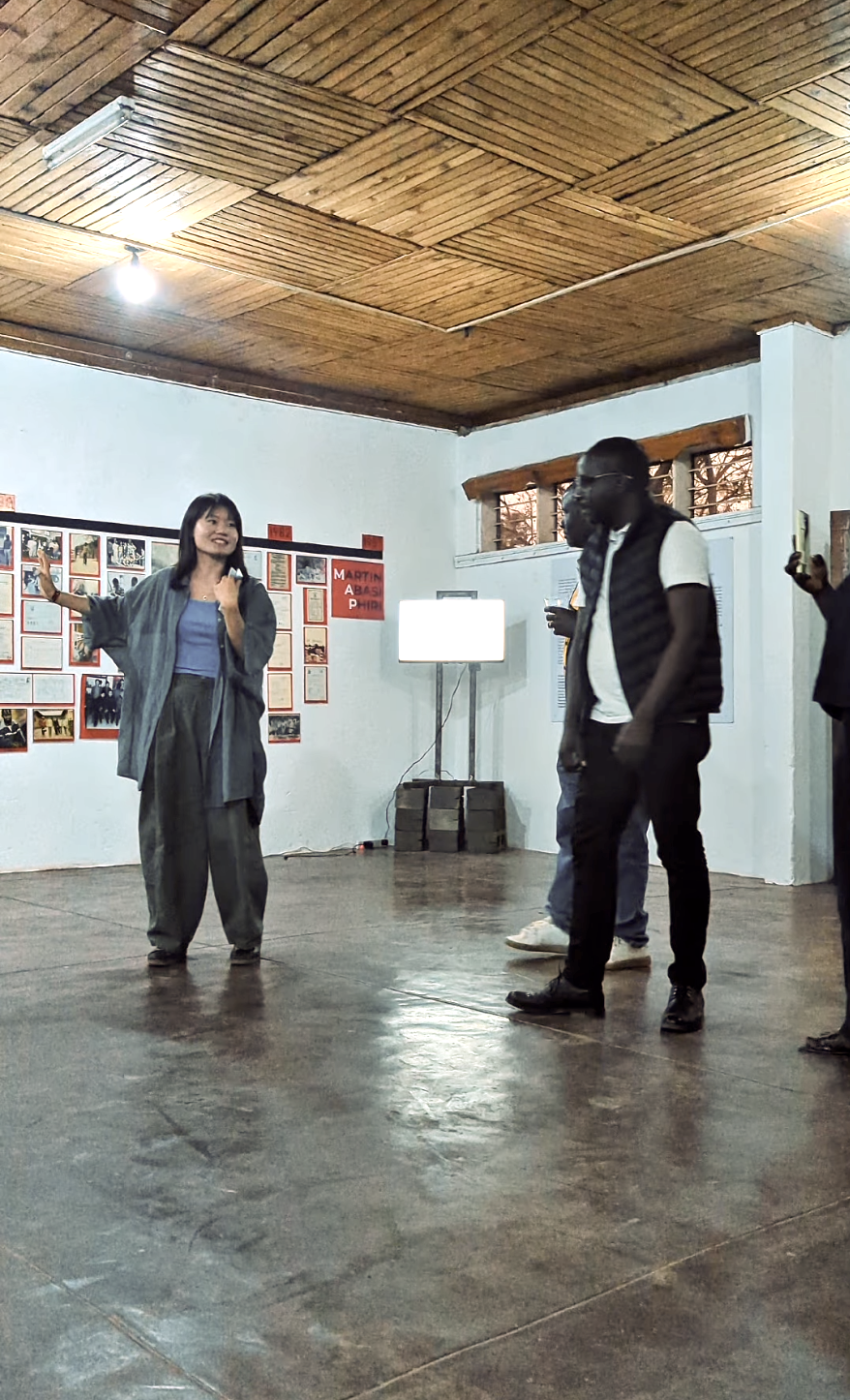
Image Credit: Alex S
“Martin Phiri: Viable Visions Retrospective”
Dates: 6th August - 6th October 2026
Venue: Martin Phiri Gallery, Visual Arts Council, behind Chipata Library, Chipata, Eastern Province, Zambia
Project Instagram: @martin_abasi_phiri_retrospec
“Viable Visions is an ongoing project that revisits the life, practice, and legacy of Martin Abasi Phiri (MAP, 1957–1997), a pivotal figure in the development of contemporary art in Zambia and an alumnus of the Central Academy of Fine Arts in Beijing. Initiated and curated by Lifang Zhang in collaboration with the Lusaka Contemporary Art Centre (LuCAC), the Zambia National Visual Arts Council (VAC), and supported by the Phiri Family, the project unfolds through exhibitions, archival research, artwork restoration, digitisation, public programmes, and publication. It re-examines the artistic, pedagogical, and institutional contributions of MAP, tracing how his visions continue to resonate with artistic practices in Zambia and on the Africa continent today.
Presented in Chipata as an extension of the Viable Visions project, this retrospective exhibition brings together a selection of archival materials that offer insights into MAP’s multifaceted practice as an artist, educator, and cultural organiser. The exhibition creates a space to encounter his visual output alongside the networks, ideas, and institutional frameworks that emerged through his and many others’ efforts. The exhibition’s presence in Chipata carries specific contextual significance. Situated in Eastern Province, MAP’s ancestral home, Chipata provides a vital locus through which to reflect on the relationship between place, memory, and artistic legacy. It is also home to the Martin Phiri Gallery, the local branch of the Visual Arts Council, an organisation whose establishment in 1989 was foundational to MAP’s vision for artist-led infrastructure.
Bringing Viable Visions to Chipata not only extends the geographic reach of the project, but grounds it within a site that directly connects his personal roots to his lasting institutional legacy.”
Text by Lifang Zhang
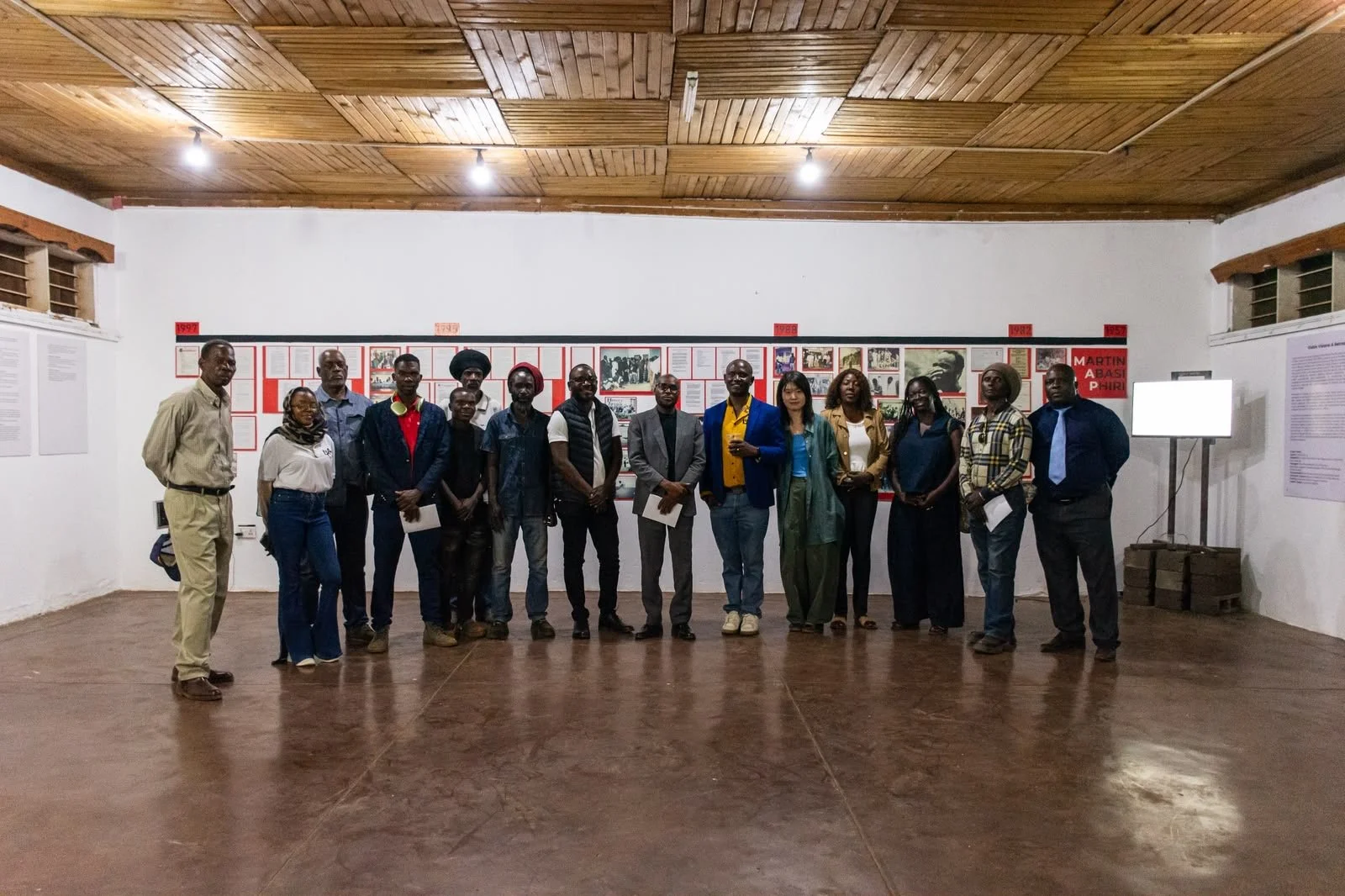
Image Credit: Alex S
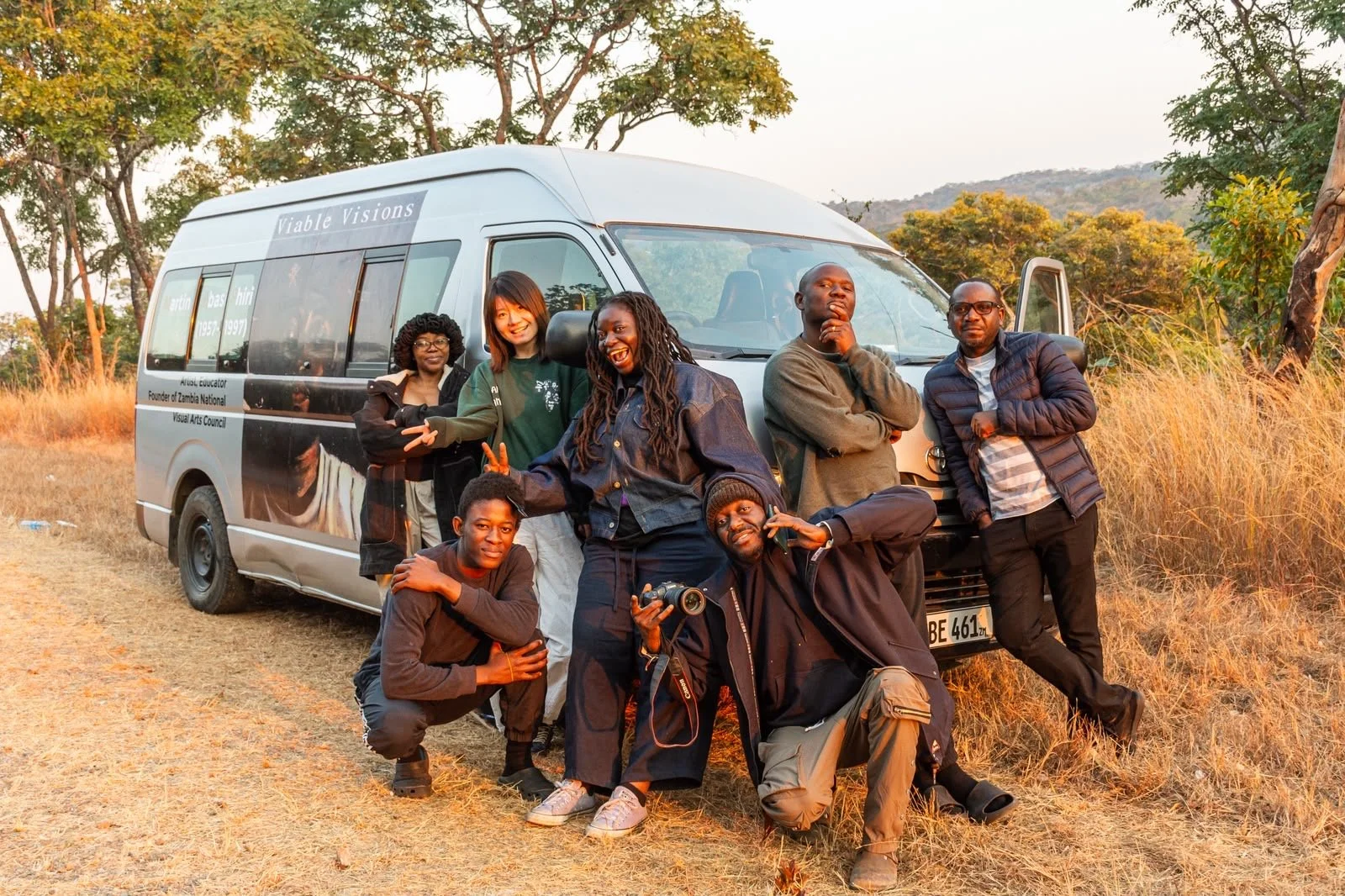
Image Credit: Alex S
私たちはどこにいても “よそ者” 。そしてそれを受け入れること。
メイボン尚子
海外で日本人が「你好(Ni Hao)」と中国語で挨拶されることはよくある。日本では「ニイハオ問題」という言葉まであって、ソーシャルメディア上でもこの経験や、その時の違和感、どう反応するのが正解なのかを考察・議論する投稿をよくみかける。約20年前、イングランドで語学を学んでいた頃は、若い男子のグループがニヤニヤしながら「你好」とからかってきたり、悪い時には唾をかけてくることさえあった。が、そこからスコットランドに移住して自分の現地人化?厚顔無恥化?が進み、特にジョージ・フロイド氏の殺害とそれに続くBLM運動以降世間一般の人種差別に対する学びも進み(と思いたい)、それに常日頃アートに関わりいわゆる “左” 寄りな界隈とアルゴリズムに身を浸していることもあったりで、次第に「ニイハオ問題」に出くわす機会も減り、あの、たった一言で動揺してしまう心とそれに対する違和感を忘れ始めていた。
2025年6月に約1ヶ月ザンビアに滞在し、あの、ニヤニヤした「你好」に久方ぶりに出くわしたとき、自分でもびっくりするほど狼狽えてしまった。イギリスでもそうだったが、私自身の経験で言うと、大抵は若い男の子のグループ。忘れ難きものとしては「Hey, panda(よう、パンダ)」もあった。背丈は小学6年生くらいとはいえ、齢40も半ばになりながら大人として若い人になんと言ってどう振る舞えばよかったのか分からず、無言で足早に去ることしかできなかった情けなさが細く長くあとを引いた。コロナ禍でのアジア人差別でもよく言われたが、「アジア人はおとなしくて馬鹿にしても言い返してこない」みたいな既存イメージを小規模でも払拭するチャンスだったのでは、と「アジア人のみんな、ごめん」とすら思った。
狼狽えたのは心の準備がなかったからもあるだろうが、今になって考えると、きっと私が勝手によそや他人に期待して、勝手に幻滅したからだと思う。新しい場所に入って仕事をするときはいつも気をつけていることだが、「そもそも自分は誰に招かれたわけでもない。新しい場所に勝手にやってきて邪魔しているよそ者であるのだから、すでにそこにある文化や暮らしを最大限に敬い、耳を傾けて学ぶ行為に集中しよう」と、アフリカ大陸訪問が初めてだったこともあって一段と気負ってやって来たザンビアだった。だから、こっちの敬いのガチンコ真剣度合い?に対して同等のリターンが受けれず、勝手にしてもいない約束を破られたような気になってビックリガックリした、ということなのかもしれない。単なる自業自得。勝手な被害者意識。
また、ザンビアと中国の長い関係について私自身が無知だったことにも理由がある。1970年代に中国がタンザニアとザンビアを結ぶタンザン鉄道の建設支援をしたことや、1990年代からの中国企業のザンビアにおける鉱物資源やエネルギー資源産業への本格的な参入など、1964年にザンビアが独立した直後から60年以上も続く両国の関係性についてもっと予備知識があったら、道端で私の顔をみて咄嗟に「你好」の挨拶が出る “近さ” も理解でき、またそれを勝手に内面化する被害者妄想もなかったはずだ。ただ、私が訪ねた時期はちょうど数ヶ月前に、銅鉱山からの廃棄物を貯留していたダムが決壊し、数百万リットルの強酸性物質が水路に流出、魚類の大量死、飲料水の汚染、農作物の破壊などがあり銅鉱山地域にある約30万世帯がひどい被害にあったときだった。ダムは中国系企業が所有・管理していたため、私自身も現地の人から中国系企業やひいては中国の方への否定的な意見や見方も聞いたりしていた時だった。そういう背景もあって、中国の人と見られて然りな顔を持つ自分は余計過敏になっていたのかもしれない。
「その気持ち、よくわかる。よくわかるよ。私も感情的になって、考えすぎてしまうことがあるから。」
ルサカで忙しくしているリファンに今回時間をもらってオンラインで会ってもらったのは、彼女が2018年から続けている調査研究の集大成として2025年にルサカで開催したマーティン・アバシ・フィリの回顧展「Viable Visions」を、つい先日作家の故郷である東州・チパタでオープンさせた巡回展について聞きたかったから。だが、告白すると、ザンビアのコンテンポラリーアートやそれに関わる人たちとこれから長く関係を築き、協働していきたい日本生まれの人間として、南アフリカで7年間学び、ザンビアの作家や作品とも深く関わる中国生まれの彼女の活動や経験も聞いてみたかった。同情が欲しかったというわけではないが、「あなたを心底敵と見なすような人に会ったことがあるってこと?」というリファンの問いに「直接というわけはないんだけど、つまり、その、、」となかなか回答がまとまらない私に彼女がかけた上記の言葉のトーンに、張り詰めていた気持ちが柔らかくなっていくような感覚があった。東アジアの女性という共通の身体を持つリファンとのオンライン空間に安全を感じていたことも確かだ。
「たぶん “中国的なもの” や “アジア的なもの” は、自分が何をしたかというよりも、自分と同じ肌の色を持つ他の人たちが何をしたかによって決まることがあるのかもしれない。それが周囲の人々に影響を与え、彼らが自分を見る目も変わり、自分自身もそのことをより意識するようになるんだと思う。とても難しいことだけど、私も少しずつ、そこから自分を切り離すことを学んでいるところ。というのも、もしそれを自分自身に当てはめてしまうと、同じ論理を他の人にも当てはめてしまうことにもなり得るから。だからいろんな要素に心を配ることは大切だけど、同時に、自分自身をそこから切り離すことも学ぶべきだと思う。というか、私の見た目が違うって、だから何?って。いろんな国で暮らしてきたんだから、当然見た目も違うし、振る舞いも違うよ。私たちは誰しも、どこに行っても “よそ者” なんだから。」リファンの言うことに頷きながら聞き入った。
「家族や友人のなかには「君は変わった」と言う人もいるけど、実際、多くの人が「君は変わらない」と言ってる。でも自分では自分の考え方が変わったと分かってる。今は以前とは違った視点を持っていて、中国で起きている出来事や状況に対する捉え方も、ずっと中国にいた人たちとは違ってる。中国を離れてた7年間は、本当に私の考え方を形成した期間だったと思う。20代半ばから30代前半は人間が形成される上で重要な時期。だからここ [アフリカ] で学んだことはすべて無意識のうちに私の基準になってる。そしてどこへ行っても世界を見る私の見方を変えてしまった。今、私は中国について改めて学び直している最中なのかもしれない。それは将来、ここ [アフリカ] での私の見方や考え方、行動の仕方にも影響を与えると思う。」
リファンはさらにこう言った。「北京のRed Brick Art Museumで展覧会をしたエチオピア出身のアーティスト、テスファエ・ウルゲッサが、パネルディスカッションでこう言った:「一度 “よそ者” になれば、永遠によそ者、常によそ者なんだ」って。彼に同意だし、私はそれを受け入れてる。そしてほとんどの場合、私自身その「中間(in-between)」にある思考の空間を楽しんでいると思う。「中間的なもの(in-between-ness)」に在ること、物理的ににあちこち移動できること、そしてその「中間」の空間を持てることは、特権でもあると思うから。たとえ一つの場所に滞在しているときでさえ、人が自分に対して抱く認識を、時には居心地の悪さを感じたりしながらあらゆるかたちで経験する。だから自分に対する認識が人によって異なるというのはよくあることだと思う。誰もが旅行先では “よそ者” としての体験をするものだけど、同時に、あちこち旅できることは本当に特権だと思う。そうできる自分は幸運だと感じてる。 “よそ者” であることを受け入れてる。孤独を感じる瞬間もあると思う。分からない言語は山ほどあるし、学ぶべき文化もたくさんある。知らない社会史もたくさん。学ぶべきことが多すぎる。」
ついでに「Collective Cares」を共同主導するにあたり漠然と抱えていた不安についても聞いてもらった。「本当にやれるのか、やる意味はあるのか、自分の役割は何なのか、なぜこれをやるのか…」と常に自問自答を繰り返しては、はっきりした回答や自信にも辿り着けず、頭を抱えてきた。私を動かしているのは、おそらく成果や意味よりも単にこのコラボレーションから何がうまれるのかみたいという感覚に尽きる。これを行うことで何がかたちになり、あるいはならず、それが一体なんの意味形成につながるかは未知数だが、やる気はあるし、やりたいと思うし、何よりワクワクするからやっている。それにリファン含め、自分とは異なる視点や背景を持つ人たちと、こうして意見交換するような空間も大好きだ。基本的には直感に従っているだけだが、時に何をやりたいのか、なぜやっているのか、何か意味があるのか、分からなくなるなって不安になる、と。
「最高じゃない!」
リファンの言葉に、また、気持ちが落ち着く。
「時間をかけて、そして心を開いていればいいんだと思う。感情的だったり、情熱的だったり、混乱していたり…どんな瞬間でも。それを受け入れれば、将来的にその感情に名前を付けることができるはず。時間はかかるけど、私は本当にそう信じてる。これは私自身の経験でもある。自分が何をしているのか、なぜここにいるのか、とひどく混乱する瞬間が本当にたくさんあった。本当に、数え切れないほど。ただ流してしまう瞬間もあるけれど、ある瞬間はそれを受け入れ、さらに先へと進み、やがてある地点にたどり着く。そうして初めて、振り返って、それを言葉で表せるようになる。その魔法を宿しているのは、時間だけ。だから、焦らないで。」
気づきと鼓舞、ケアをありがとう、リファン。
*
リファンがキュレーターをつとめる「Viable Visions」展の詳細は以下。詳細はインスタグラムで。現在出版物を準備中とのこと!
「Martin Phiri: Viable Visions Retrospective」
会期:2026年8月6日(木)〜10月6日(火)
会場:ビジュアル・アーツ・カウンシル内マーティン・フィリ・ギャラリー(ザンビア東州チパタ、チパタ図書館の裏手)
インスタグラム:@martin_abasi_phiri_retrospec
